
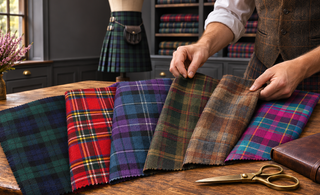
Choosing a tartan can feel more complicated than choosing the kilt itself. A search for one surname may reveal several patterns—modern, ancient, hunting, dress or weathered—while someone without a Scottish surname may wonder whether they are allowed to wear tartan at all.
The reassuring answer is that tartan is far more open than many first-time buyers expect. Traditionally, people often begin with a tartan connected to their surname, clan or ancestral district. If that route does not produce a clear choice, universal, district and fashion tartans provide excellent alternatives. The Scottish Register of Tartans states that there are traditions but no general law dictating which tartan a person must wear.
Quick answer: Start with your family name or known clan connection. If there is no clear match, consider a district linked to your ancestry, a universal tartan that anyone can wear, or simply a color palette that suits the event and the rest of your wardrobe. Then check availability, fabric, yardage and delivery time before ordering.
Explore the verified men’s tartan kilt collection or browse women’s tartan kilts while using the steps below.
What is a tartan?
A tartan is a woven pattern formed by horizontal and vertical colored bands crossing at right angles. The complete repeating pattern is called the sett. Each sett is defined by the order, color and proportion of its threads, not only by a general impression such as “red plaid” or “green check.”
This matters because two tartans can use almost the same colors while representing different patterns. It also explains why a named tartan can look different in modern, ancient or weathered color palettes while retaining the same underlying sett.
Tartan can carry family, regional, military, organizational or commemorative meaning. It can also be worn purely for style. Understanding which category matters to you is the first step toward a confident choice.
Can anyone wear any tartan?
In most situations, anyone can wear the tartan they genuinely like. You do not need Scottish citizenship, a clan certificate or anyone’s permission to wear a widely available clan, district, universal or fashion tartan. Wearing it respectfully is generally understood as appreciation of Scottish culture.
There are a few sensible qualifications:
- Private and corporate tartans may be intended for members, staff or approved users.
- Some regimental tartans are worn with special respect for military association, even where no law prevents general wear.
- Balmoral tartan is traditionally reserved for the Royal Family and people personally authorized by the Sovereign.
- Protected designs can carry intellectual-property restrictions on commercial reproduction, even though wearing a legally purchased garment is a different issue.
For an ordinary shopper selecting from a retailer’s public range, the practical rule is simple: choose a meaningful or attractive tartan, avoid falsely claiming membership or service, and ask when a pattern appears to be private or institution-specific.
The five main routes to choosing a tartan
1. Clan or family tartan
If you have a Scottish surname or a known connection to a clan, begin there. Search the surname and sensible spelling variations. Some clans have several accepted tartans, and the same name may appear in modern, ancient, hunting or dress versions.
A surname match is a starting point rather than automatic proof. Not every Scottish name has its own tartan, and not every person with a similar name belongs to the same historical family. Use reputable clan information and the Scottish Register of Tartans to confirm the background.
When the connection is genuine, a clan tartan can make the kilt especially meaningful for weddings, memorial occasions, Highland games and family gatherings.
2. Sept or associated-family tartan
A sept is a family historically associated with a larger clan. Lists of sept names can vary among clan organizations, so treat a claimed association carefully. If your surname appears as a sept, check the relevant clan society or authoritative historical source instead of relying on a single commercial surname chart.
If the relationship feels uncertain, you can still choose the tartan because you like it—just avoid presenting an unverified association as settled genealogy.
3. District tartan
District tartans are connected to places rather than surnames. They are useful when you know the Scottish region, town, island or county associated with your family but cannot identify a reliable clan tartan.
A district tartan can also represent a place that matters personally: where you were born, studied, married, lived or developed a strong connection. It creates a meaningful story without forcing a surname link that may not exist.
4. Universal tartan
Universal tartans are designed or commonly accepted for broad public wear. They are the easiest choice when you want a Scottish look without claiming a clan connection.
Popular options include dark green-and-navy patterns, bright red setts and modern blue or purple designs. The best universal tartan is not necessarily the best-known one; it is the one that works with your complexion, jacket, event and long-term wardrobe.
For a practical dark option, the active Black Watch Modern Tartan Utility Kilt with Detachable Pockets shows how a widely worn green-and-navy sett can move into contemporary casual clothing. For a brighter alternative, the verified Royal Stewart Modern Tartan Utility Kilt creates a bold red focal point.
5. Fashion or personal-choice tartan
Fashion tartans are chosen primarily for color and design rather than family or district meaning. They are ideal when the kilt will be part of a modern wardrobe, alternative outfit, performance look or coordinated wedding palette.
Choosing by appearance is not a lesser choice. A tartan you enjoy and wear repeatedly has more value than a historically connected sett that never leaves the wardrobe because the colors do not suit you.
Clan tartan vs universal tartan
| Question | Clan tartan | Universal tartan |
|---|---|---|
| Main connection | Family or clan tradition | Designed or accepted for general wear |
| Who can wear it? | Commonly worn by members and admirers; generally not legally restricted | Anyone |
| Best for | Heritage, family events and personal identity | First kilts, gifts, groups and shoppers without a clan link |
| Research required | Surname, sept and clan verification may help | Minimal; choose by color and occasion |
| Availability | Rare setts may require special production | Popular setts are often easier to source |
If you are ordering a group of kilts, universal tartans can simplify availability and visual consistency. Clan tartans are better when the group shares a genuine connection or the event celebrates a specific family.
Ancient vs modern tartan: what the names really mean
“Ancient” and “modern” usually describe color palettes, not the age of the sett.
Modern tartans typically use stronger, darker and more saturated colors. Black may appear deep, greens rich, blues dark and reds vivid. They work well for formal evening wear, bold photographs and crisp contrast with black accessories.
Ancient tartans use softer colors intended to suggest the appearance of earlier natural dyes. Black may become brown, dark green may become a lighter olive or blue may appear softer. The result often feels relaxed, rustic and well suited to tweed.
The pattern can be the same while the mood changes dramatically. Lay the swatches side by side and choose the palette that works with your jacket, shoes, accessories and expected lighting.
Weathered, muted, hunting and dress tartans
Weathered tartan
Weathered palettes use earthy browns, soft blues, greys and muted greens to suggest cloth affected by age and outdoor conditions. They pair naturally with brown leather, tweed and autumn colors.
Muted tartan
Muted colorways reduce brightness without creating the strongly brown or faded character of weathered versions. They are a good middle ground for wearers who find modern colors too bold but ancient colors too pale.
Hunting tartan
Hunting versions often replace bright clan colors with darker greens, blues or browns. The name describes a style tradition; you do not need to be hunting to wear one. These tartans are popular for outdoor events and understated formal outfits.
Dress tartan
Dress tartans frequently introduce more white or lighter areas into an existing clan pattern. They can look especially striking at weddings, dances and summer events. “Dress” does not automatically make the sett more formal than every darker version; the complete outfit determines formality.
How to choose tartan colors for your wardrobe
A kilt is easier to wear when at least two colors connect with items you already own. Before ordering, compare the tartan with:
- Your preferred kilt jacket or blazer
- Black or brown footwear
- Sporran leather and metal finish
- Kilt hose and flashes
- Shirts, ties and knitwear
- Winter outerwear
Dark green, navy and charcoal tartans are usually versatile. Red tartans create a strong statement and are especially festive. Blue tartans can feel contemporary, while weathered and hunting patterns work beautifully with brown tweed and outdoor settings.
Do not judge from one small screen image alone. Screen brightness can change reds, blues and greens. Examine multiple photographs and, when available, request or compare a physical swatch before committing to a large custom order.
Choosing a tartan for a wedding
A wedding tartan needs to work for the wearer, the couple and the photographs. Use this order of priority:
- Honor a genuine family connection when it is important to the couple.
- Check whether enough fabric or finished kilts are available for the full party.
- Compare the sett with the wedding colors, flowers and venue.
- Decide whether everyone will wear the same tartan or the groom will stand apart.
- Confirm production and delivery time before announcing the final choice.
One tartan across the group creates visual unity. Another approach is placing the groom in a stronger clan tartan and the party in a quiet universal sett. Avoid combining several unrelated red-dominant tartans; small differences that seem harmless individually can look unplanned in group photographs.
The complete kilt outfit collection can help you compare coordinated jackets, sporrans and accessories after choosing the main sett.
Choosing a tartan for a first kilt
Your first kilt should be wearable more than once. A dark universal or widely stocked clan tartan is often the safest choice because it works across formal and casual settings and is easy to coordinate.
Ask yourself:
- Does this tartan have personal meaning?
- Would I wear these colors outside one event?
- Does it work with black, brown or both?
- Is the fabric available in the construction I want?
- Will I still like it when seasonal trends change?
- Can I source matching accessories if I want them later?
Then decide how much cloth and fullness you prefer. The verified 5 Yard vs 8 Yard Kilt guide explains the differences in pleats, weight, swing and formality.
Choosing tartan for a utility or modern kilt
A utility kilt uses tartan differently from a traditional pleated kilt. Pockets, straps, black cotton panels, leather and metal hardware can cover or frame parts of the sett. A large bright pattern may become more dramatic, while a dark tartan may blend into the construction.
For hybrid designs, decide whether tartan should be the main fabric or a contrast element. Black with Black Watch creates a subtle effect; black with Royal Stewart produces much stronger contrast.
Check the product photographs from the front, side and back. The same tartan can look completely different when placed only in the pleats or pockets rather than across the whole garment.
Choosing tartan for women’s kilts and skirts
Women can use the same clan, district, universal and fashion options. The cut and length influence how large the sett appears. A broad tartan repeat may dominate a mini skirt, while a smaller sett can look busier across a full pleated design.
For a versatile winter wardrobe, pair dark tartan with black tights, boots and knitwear. For weddings or summer events, a dress tartan or lighter ancient colorway can coordinate with neutral tops and tailored jackets.
Browse tartan kilts for women and the wider women’s kilts and skirts collection to compare how different cuts change the visual balance of the sett.
Tartan for sashes, fly plaids and accessories
Matching tartan accessories can connect a couple or group without requiring everyone to wear the same kilt. Options include sashes, ties, waistcoats, hats, flashes and fly plaids.
The tartan clan sash collection can help coordinate women’s outfits or formal group presentation. A fly plaid creates a much larger area of pattern, so it should match the kilt rather than introduce a competing sett. If you plan to wear one, review the fly plaid placement and folding guide.
Matching every accessory exactly can feel overwhelming. A simpler approach is to repeat the tartan once, then use solid colors taken from the sett.
How to research a surname tartan
- Start with the exact surname. Search reputable clan and tartan sources.
- Try historical spellings. Older records may use different forms.
- Check sept claims carefully. Confirm them through the relevant clan organization.
- Look at ancestral locations. A district tartan may be more reliable than a weak surname match.
- Compare registered names and dates. Similar commercial names can describe different setts.
- Keep genealogy separate from shopping. You can wear a tartan you love even if the family link remains uncertain.
The Scottish Register of Tartans records designs and their stated background, but it is not a complete genealogy service. A registered name tells you about the tartan; it does not prove an individual family relationship.
Does your nationality matter?
No. You can wear tartan whether you live in Scotland, the United States, Canada, Australia, Pakistan or anywhere else. Scottish heritage can add personal meaning, but appreciation and respectful use are enough for a universal, district or fashion tartan.
For diaspora families, tartan can be a way to explore ancestry. For people without Scottish roots, it can be a celebration of craftsmanship, music, sport, friendship or a meaningful visit to Scotland.
How availability changes the decision
The perfect tartan on paper is not always the best tartan for a fixed event date. Rare cloth may need special weaving, while popular universal patterns are often available in more products and sizes.
Before confirming a tartan for a wedding or group order, verify:
- Current fabric or product availability
- Number of kilts required
- Size range
- 5-yard or 8-yard construction
- Fabric weight and composition
- Matching accessories
- Production and shipping timeline
The active US-stock 5-Yard 13oz Traditional Tartan Kilt is one current example with multiple tartan choices. For a heavier US-stock option, the verified Pride of Scotland 8-Yard 16oz Tartan Kilt illustrates a bright universal choice. Availability can change, so use each live product page as the final source.
How to match tartan with formal accessories
Let the tartan guide the supporting colors:
- Use black leather with sharp modern or red-dominant tartans.
- Use brown leather with hunting, ancient and weathered palettes.
- Choose hose from a secondary color rather than the brightest stripe.
- Keep the jacket solid when the tartan is visually busy.
- Repeat one metal finish across buckle, sporran and jacket buttons.
If the tartan contains several strong colors, avoid adding a patterned shirt or competing plaid tie. A plain shirt and textured jacket allow the sett to remain the focal point.
Common tartan mistakes
- Assuming every Scottish surname has a tartan. Many do not.
- Believing “ancient” means the pattern is older. It usually describes the dye palette.
- Choosing only from a small digital thumbnail. Color and sett scale need closer inspection.
- Claiming an unverified clan connection. Wear the tartan, but be accurate about the story.
- Ignoring the full outfit. A beautiful sett can clash with the intended jacket or wedding colors.
- Waiting too long to check availability. Rare cloth and group quantities can require extra time.
- Mixing unrelated tartans without a plan. Use one dominant sett and solid supporting colors.
- Ordering by trouser size. Tartan choice does not replace proper kilt measurements.
Before ordering, follow the verified How to Measure for a Kilt guide.
A practical tartan selection checklist
- Write down any genuine surname, clan, district or organizational connection.
- Choose whether meaning or color is the higher priority.
- Shortlist three to five setts.
- Compare modern, ancient, hunting, dress, muted and weathered versions where available.
- Match each shortlist option with your jacket, shoes and accessories.
- Check the sett at garment scale, not only as a small swatch.
- Confirm fabric composition, weight and kilt construction.
- Verify live availability and production time.
- Take accurate waist, seat and length measurements.
- Choose the tartan you will enjoy wearing repeatedly.
Frequently asked questions
Can I wear a clan tartan if I am not part of the clan?
In general, yes. Most clan tartans are not legally restricted. Wear the pattern respectfully and do not falsely claim family membership. Universal or district tartans are easy alternatives if you prefer to avoid the question.
What tartan can anyone wear?
Universal tartans are intended or commonly accepted for broad wear. District and fashion tartans are also practical options when you have no clan connection.
Is Black Watch tartan only for the military?
Black Watch has a military history, but it is now widely worn by the public in kilts, jackets and fashion garments. It is one of the most versatile dark tartans.
Can anyone wear Royal Stewart tartan?
Royal Stewart is strongly associated with the Royal House of Stewart, but it has long been widely worn by the public and is commonly treated as a universal fashion choice.
What is the difference between ancient and modern tartan?
They generally use the same sett with different color palettes. Modern versions are stronger and darker; ancient versions are softer and intended to resemble early natural dyes.
What if my surname has no tartan?
Try historical spellings, investigate a reliable sept connection, consider the district tied to your ancestry, or choose a universal or fashion tartan.
Should a wedding party all wear the same tartan?
It creates the strongest visual unity, but it is not required. The groom can wear a family tartan while the party wears a coordinated universal sett. Confirm availability before finalizing the plan.
Can men and women wear the same tartan?
Yes. Tartans are not inherently restricted by gender. The garment cut, styling and accessories can change while the sett remains the same.
Does tartan choice affect price?
It can. Widely stocked patterns may be easier to source, while rare or specially woven setts can cost more and take longer. Fabric, yardage and tailoring also affect the total.
Final advice: choose meaning, color and practicality together
The best tartan is not simply the one attached to your surname or the one currently in fashion. It is the sett that balances personal meaning, colors you will wear, the right level of formality and realistic availability.
Begin with family or place when those connections matter. Choose a universal tartan when you want freedom and versatility. Use ancient, modern, hunting, dress, muted and weathered palettes to refine the mood. Then confirm the fabric, construction and measurements.
Browse the full Kilt Experts kilt collection and compare live product options before placing your order. The right tartan should feel like a choice you can explain—and a kilt you will be proud to wear for years.