
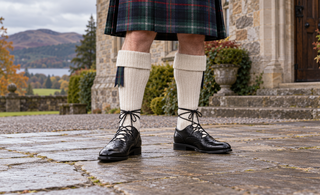
Ghillie brogues are instantly recognisable by their open throat, decorative perforations and extra-long laces. They are also one of the easiest parts of Highland dress to get wrong: laces tied too high can slide down, loose bows can become a trip hazard, and uneven wrapping can distract from an otherwise polished kilt outfit.
The quick method: put on your kilt hose and shoes, tighten the foot lacing, bring the two long lace ends together, twist them neatly three to six times at the front, take them around the back of the ankle, return them to the front, and finish with a secure double bow. Keep the wrap low—around the ankle rather than climbing up the calf—and make sure it is snug without restricting circulation.
This complete guide explains how to tie ghillie brogues step by step, how high the laces should sit, what socks to wear, how the shoes should fit and which footwear works best for weddings, ceilidhs, Highland games and everyday kilt outfits.
What Are Ghillie Brogues?
Ghillie brogues are traditional Scottish-style shoes commonly worn with kilts and formal Highland dress. Unlike an ordinary Oxford or Derby shoe, a ghillie brogue normally has no conventional tongue. Its long laces pass through open eyelets and extend far enough to wrap around the ankle before being tied.
The brogued pattern—the punched decorative detailing across the leather—gives the shoe its formal character. Modern pairs may be made from genuine leather or synthetic leather, with soles designed for ceremonies, dinners, weddings and dancing. Browse the Kilt Experts kilt shoes and ghillie brogues collection to compare traditional and contemporary options.
Why Do Ghillie Brogues Have Long Laces?
The long laces are part of the shoe’s distinctive open-lacing design. They help secure the shoe at the ankle while creating the recognisable twisted-and-wrapped appearance associated with Highland dress. The goal is not to lace the entire calf like a tall boot. A tidy, low wrap is more secure, more comfortable and visually better balanced with kilt hose.
Correct tying matters for practical reasons as well as appearance. Laces that are too loose may drop toward the heel or catch underfoot. Laces tied too tightly can press into the leg, especially after several hours of standing, sitting or dancing.
Before You Tie Them: Put On Your Kilt Hose Correctly
Start with your kilt hose and flashes already in position. The hose should sit just below the knee, with the cuff folded neatly and the flashes visible at the sides. Smooth out heavy wrinkles around the ankle before putting on the shoes; bulky folds can create pressure points and make the laces look uneven.
For detailed sock height, cuff and flash placement, see our guide on how to wear kilt socks and flashes. US shoppers can also view the active USA-stock Highland kilt hose.
How to Tie Ghillie Brogues: Step by Step
Step 1: Put the shoes on and centre your heel
Slide each foot into the shoe and make sure your heel is seated firmly at the back. The shoe should feel secure across the widest part of the foot without crushing the toes. Stand briefly to check that your foot is not sliding forward.
Step 2: Tighten the lacing over the foot
Starting near the toe, work upward through the eyelets and gently remove slack. Keep the pressure even on both sides. Do not yank only the top section; that can leave the forefoot loose while making the upper edge uncomfortably tight.
Step 3: Make the lace ends equal
Hold one lace end in each hand and compare their length. Pull a little lace through the shorter side until both ends are approximately even. Equal ends make the final twists, ankle wrap and bow symmetrical.
Step 4: Create a short twist at the front
Cross the lace ends over each other and twist them together three to six times. The twisted column should remain short and neat, usually only a few centimetres above the top of the shoe. Keep enough lace free to pass around the ankle and form a secure bow.
Step 5: Take the laces around the ankle
Separate the ends, bring them around opposite sides of the ankle and cross them at the back. Keep the wrap low. It should sit around the ankle area, not travel halfway up the calf.
Step 6: Return the laces to the front
Bring both ends forward again, keeping similar tension on each side. Check that the rear crossover is flat and that neither lace has twisted into an uncomfortable cord.
Step 7: Tie a secure bow
Finish with a standard bow at the front or slightly toward the outer side of the ankle. A double knot is sensible for weddings, ceilidhs and long events, provided you can still untie it easily. Tuck very long loops neatly so they cannot fall beneath the shoe.
Step 8: Stand, walk and recheck
Walk several steps, flex each ankle and sit down. Your heel should stay in place, the wrap should not slide and your foot should not feel numb or pinched. Retie immediately if the bow loosens, the laces migrate downward or the ankle feels restricted.
How Many Times Should You Twist the Laces?
There is no single compulsory number for every shoe and wearer. Three to six front twists usually produce a neat result, but lace length, ankle size and shoe design vary. Use enough twists to organise the laces without using so much length that you cannot wrap the ankle and tie a safe bow.
The finished twist should look like a compact vertical column, not a long rope climbing the leg. Symmetry matters more than chasing an exact count. If one shoe has four twists and the other has five, adjust them so the pair looks balanced.
How High Should Ghillie Brogue Laces Go?
Keep them low around the ankle. Wrapping the laces high up the calf may look dramatic in costume photography, but it is less practical: the laces can slip down, distort the hose and tighten as the calf flexes. A low wrap also preserves the clean line between the shoe, sock and flashes.
As a simple visual check, the bow should remain well below the folded top of the hose. The laces should frame the ankle rather than divide the full length of the sock.
How Tight Should the Laces Be?
The foot section should feel secure, while the ankle wrap should be comfortably snug. You should be able to move your ankle naturally and slide a fingertip beneath the wrapped lace. Signs that the laces are too tight include tingling, numbness, throbbing, deep marks in the hose or a cold feeling in the foot.
Your feet may swell slightly during a long day. If you are dressing for a wedding or formal event, tie the shoes early enough to walk in them, then recheck before leaving. For a ceilidh, test a few side steps and turns to make sure the heel does not lift.
Front Bow or Side Bow?
A front bow is the clearest and most widely recognised finish. It is easy to inspect, easy to retighten and looks symmetrical in photographs. A bow placed slightly toward the outside of each ankle is also acceptable when it feels more comfortable or keeps the knot away from the opposite shoe.
Avoid tying the bow on the inner ankle if the loops rub together while walking. Whichever position you choose, use the same placement on both feet.
Ghillie Brogues vs Standard Brogues
Both can work with a kilt, but they create different levels of formality and convenience.
| Feature | Ghillie Brogues | Standard Brogues |
|---|---|---|
| Lacing | Long laces wrapped at the ankle | Conventional short laces |
| Upper | Open throat, usually without a standard tongue | Oxford or Derby-style construction |
| Best use | Formal Highland dress, weddings, ceilidhs | Daywear, business-casual and versatile kilt outfits |
| Look | Distinctively traditional and ceremonial | Classic, understated and easy to rewear |
| Ease | Needs careful tying | Quick familiar lacing |
If you prefer a conventional lace-up shoe, consider the active Classic Black Genuine Leather Brogue. For tweed, earthy tartans or less formal daywear, the Tan Genuine Leather Brogue offers a warmer alternative.
Which Shoes Should You Wear With a Kilt?
Formal weddings and evening events
Polished black ghillie brogues are a natural choice with a Prince Charlie or formal Argyll outfit, white or cream hose and a dress sporran. The black leather helps anchor the brighter tartan and silver-toned accessories.
Wedding guest and semi-formal outfits
Black ghillie brogues or standard black brogues both work. Let the invitation, venue and jacket decide the formality. A smart brogue can feel slightly quieter, while ghillie lacing makes the Highland element more prominent.
Daywear and tweed
Brown or tan brogues coordinate well with tweed jackets, earthy tartans and brown leather sporrans. Dark brown ghillie brogues can work too, but ordinary brogues are often easier for extended walking.
Ceilidhs and dancing
Choose a secure, well-fitting sole and double-knot the bow. Comfort matters more than ornament when you will be turning and moving quickly. Break the shoes in before the event rather than wearing a brand-new pair for the first time.
Highland games and outdoor events
Consider the ground conditions. Polished dress shoes are suitable for ceremonies and social areas, but grass, mud or uneven terrain may call for sturdier footwear. Do not sacrifice grip simply to achieve a formal appearance.
How Should Ghillie Brogues Fit?
The shoe should hold the heel securely and give the toes enough room to move. The widest part of your foot should align with the widest part of the shoe. Kilt hose are often thicker than ordinary dress socks, so try shoes with the same hose you plan to wear.
When comparing US, UK and EU sizes, use the conversion shown on the specific product page rather than relying on memory. Different lasts and materials can feel different even when the label is the same. If you are between sizes, consider foot width, hose thickness and whether an insole will be used.
Black or Brown Ghillie Brogues?
Black is the safest all-purpose colour for formal Highland dress. It coordinates with most black sporrans, formal jackets and dark leather belts. Brown or chocolate shoes are better suited to daywear, tweed, rustic weddings and outfits built around warm leather accessories.
The leather pieces do not need to be an exact shade, but they should feel related. Black shoes with a black sporran create a clean formal line. Brown shoes with a brown day sporran and tweed jacket create a relaxed, coherent palette. For more complete outfit combinations, see what to wear with a kilt for every occasion.
Common Ghillie Brogue Lacing Mistakes
Wrapping too high
High wraps tend to slide, bunch the hose and tighten unpredictably. Keep the laces at the ankle.
Leaving the foot loose
An attractive ankle bow cannot compensate for slack over the foot. Tighten from the lower eyelets upward before making the twist.
Making one lace much longer
Unequal ends create a crooked twist and oversized loop on one side. Balance the ends before wrapping.
Using too many front twists
An excessively long twisted column wastes lace and looks untidy. A short, compact twist is enough.
Tying tightly enough to restrict circulation
Secure does not mean painful. Retie immediately if you notice numbness, pins and needles or unusual pressure.
Leaving long loops near the ground
Large loops can catch under the shoe or on furniture. Double-knot a proportional bow and tuck excessive length safely.
Wearing brand-new shoes all day
Break them in at home with your kilt hose. This reveals heel rubbing or pressure points before an important event.
How to Keep the Laces Secure All Day
- Use even tension from the toe to the top eyelets.
- Keep the ankle wrap low and flat.
- Choose a double bow for dancing or long events.
- Make loops short enough to stay away from the sole.
- Recheck after the first 15 to 30 minutes of wear.
- Replace frayed or stretched laces before they fail.
If smooth laces repeatedly loosen, a balanced double knot usually works better than simply pulling the wrap tighter. Excessive tightness creates discomfort without fixing a poor knot.
How to Care for Ghillie Brogues
After wear, loosen the laces fully rather than forcing your foot out of the shoe. Wipe away dust and surface moisture with a soft cloth. Let damp shoes dry naturally at room temperature; direct heat can damage leather, adhesive and shape.
For genuine leather, use a suitable conditioner sparingly and apply polish that matches the colour. Remove or protect the laces while polishing so they do not become coated. Shoe trees or loosely packed acid-free paper can help maintain the shape between events.
For synthetic leather, follow the product’s care instructions and avoid heavy leather conditioners that are not designed for the material. Store every pair in a cool, dry place with the laces untangled.
Frequently Asked Questions
Do ghillie brogue laces go around the calf?
No. They should normally wrap low around the ankle. Taking them high up the calf makes slipping, bunching and uncomfortable tightening more likely.
How many twists should ghillie brogue laces have?
Three to six neat front twists are a useful starting point. Adjust for lace length and ankle size, keeping the twist compact and both shoes symmetrical.
Should the bow be at the front or side?
The front is a classic, easy-to-check position. Slightly toward the outer ankle is also practical. Avoid inner bows that rub together while walking.
Can you wear ordinary brogues with a kilt?
Yes. Standard black or brown brogues are excellent for daywear, wedding guests and smart-casual kilt outfits. Ghillie brogues simply create a more distinctive Highland-dress finish.
What colour socks go with black ghillie brogues?
Cream, off-white, black, charcoal and colours drawn from the tartan can all work. Match the formality and let the hose support the outfit rather than compete with it.
Can women wear ghillie brogues with a kilt?
Yes. The tying method is the same. Focus on correct shoe fit, comfortable hose or socks, and a low secure ankle wrap.
Are ghillie brogues suitable for all-day wear?
They can be, provided the fit, sole and lacing are comfortable. Break them in first, avoid overtightening and choose footwear appropriate to the terrain.
Final Ghillie Brogue Checklist
- Kilt hose are smooth and positioned before the shoes go on.
- The heel is seated and the foot lacing is evenly tightened.
- Both lace ends are approximately equal.
- The front twist is short, neat and symmetrical.
- The wrap stays low around the ankle.
- The bow is secure, double-knotted when needed and clear of the sole.
- You can walk, sit and flex the ankle without pinching or numbness.
Once you learn the sequence, tying ghillie brogues takes only a minute or two. Prioritise a secure foot, a low ankle wrap and a compact bow—the result will look traditional, photograph well and stay comfortable throughout the event. Explore more kilt accessories to complete the outfit.