
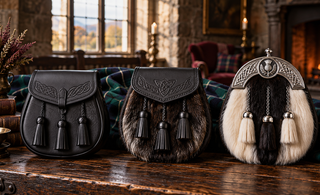
A sporran is one of the most recognisable parts of Highland dress, but choosing one can feel surprisingly complicated. Should you buy leather or fur? Is a day sporran formal enough for a wedding? Does the metal cantle need to match your jacket buttons? And where should the pouch actually sit?
This guide explains how to choose a sporran by type, occasion, fit, material and outfit. Whether you are assembling your first kilt outfit or upgrading for a formal event, the right choice should look balanced, feel comfortable and give you useful storage without overpowering the tartan.
Quick answer: choose a simple leather day sporran for casual wear, a leather-and-fur semi-dress sporran for maximum versatility, and an ornate fur sporran with a metal cantle for evening or ceremonial dress. For most first-time buyers who attend a mix of weddings, dinners and daytime gatherings, semi-dress is the safest all-round option.
You can compare the complete Kilt Experts sporran collection while using the guide below to narrow the options.
What Is a Sporran, and Why Is It Worn?
The word sporran comes from the Gaelic word for purse. Because a traditional kilt has no conventional trouser pockets, the sporran provides a practical place for small essentials. It also creates a visual centre for the outfit, sitting against the front apron of the kilt and connecting the jacket, belt, tartan and footwear.
A sporran is normally suspended from a chain strap or leather strap around the waist. Its front may be made from leather, hair-on hide, fur or a combination of materials. Decorative features range from subtle embossing to tassels, Celtic motifs and polished metal cantles.
The important point is that a sporran is both functional and dress-specific. A heavily ornamented design can look out of place with a casual sweater and day kilt, while a plain utility pouch may appear underdressed beside a Prince Charlie jacket. Choosing by occasion keeps the whole outfit coherent.
Types of Sporrans at a Glance
| Type | Typical materials | Best for | Visual character |
|---|---|---|---|
| Day | Plain or embossed leather | Casual wear, daytime events, Highland games | Simple, durable and understated |
| Semi-dress | Leather with fur or hair-on hide | Weddings, ceilidhs, dinners, smart daytime wear | Polished without being highly ceremonial |
| Full dress | Fur or hair with an ornate metal cantle | Black-tie events, formal weddings, evening dress | Decorative, traditional and formal |
| Horsehair | Long hair with a substantial cantle | Pipe bands, military dress and ceremonial wear | Dramatic, specialised and highly traditional |
1. Day Sporrans: The Casual, Hard-Wearing Choice
A day sporran is usually made primarily from leather. It may have a plain flap, Celtic embossing, braided edges or three leather tassels, but it avoids the large metal cantle and abundant fur associated with evening dress. This makes it easy to wear with a tweed jacket, waistcoat, shirt, knitwear or a relaxed kilt outfit.
Choose a day sporran when comfort, durability and practical storage matter most. It works especially well for Highland games, festivals, outdoor gatherings, sightseeing, informal lunches and everyday heritage wear. Brown leather feels warm and rustic, particularly with earth-toned tweed and muted tartans. Black leather creates a sharper look and coordinates easily with black shoes, belts and jackets.
A day sporran is also an excellent starting point for a first kilt outfit if most of your events are casual. Browse leather sporrans, or consider the black leather three-tassel sporran for a straightforward traditional shape.
2. Semi-Dress Sporrans: The Most Versatile Option
Semi-dress sporrans occupy the useful middle ground between plain daywear and ornate formalwear. They commonly combine a leather flap with a fur or hair front and decorative tassels. Because the decoration is noticeable but restrained, this category works across more dress codes than almost any other.
A semi-dress design is appropriate for many weddings, receptions, Burns suppers, ceilidhs, dinners and smart daytime occasions. It complements an Argyll-style jacket particularly well, but it can also work with a waistcoat or a smart shirt. If your invitation says semi-formal, or if the event moves from a daytime ceremony to an evening reception, this is usually the safest answer.
The men's black leather and fur semi-dress sporran shows the characteristic balance: enough texture for a special occasion without the rigid formality of a large cantle.
3. Full-Dress Sporrans: For Formal and Evening Highland Dress
A full-dress sporran is the most ornate mainstream style. It typically uses a fur or hair front, a polished metal cantle and decorative tassels or chains. The cantle forms the rigid top frame and may feature Celtic knotwork, a thistle, a clan-inspired emblem or another traditional motif.
Choose full dress for black-tie dinners, formal evening receptions, ceremonial occasions and weddings where the rest of the outfit is equally polished. It pairs naturally with a Prince Charlie jacket and waistcoat, formal kilt hose, flashes and dress shoes. An ornate sporran can also complete a formal Argyll outfit, provided its finish does not clash with the jacket hardware.
For a classic high-contrast look, see the black-and-white full-dress sporran with Celtic cantle. If you prefer a cleaner leather-led design with a national motif, the Scottish flag traditional sporran offers a different interpretation. You can also compare the broader fur sporran collection.
Do not assume that the most decorative choice is automatically the best. The sporran should support the tartan rather than compete with it. With a bold, high-contrast tartan, a controlled black, white and silver palette often looks more balanced than several additional colours.
4. Horsehair Sporrans: A Specialised Ceremonial Style
Horsehair sporrans are longer and more dramatic than standard dress sporrans. They are strongly associated with pipe bands, military-inspired Highland dress and formal ceremonial presentation. Their scale helps them remain visually prominent with doublets, plaids and other elaborate uniform elements.
For most wedding guests and first-time kilt wearers, a horsehair sporran is more specialised than necessary. For pipers, band members, performers or anyone assembling a historically inspired ceremonial outfit, however, it may be exactly right. Explore the horsehair sporran collection if your outfit calls for that distinctive silhouette.
How to Choose a Sporran for the Occasion
Casual daytime wear
Use a leather day sporran with a shirt, knitwear, waistcoat or tweed jacket. Keep the ornamentation moderate and choose leather that relates to your footwear. A day style is practical for walking and standing for long periods because it is generally lighter and less rigid.
Weddings
Your role and the stated dress code matter. A guest at a relaxed daytime wedding can wear a smart day or semi-dress sporran. A groom or member of the wedding party in coordinated formal Highland dress will usually look better with a full-dress design. For an event that crosses from afternoon into evening, semi-dress offers useful flexibility.
Before finalising the accessory, consider the complete outfit using our guide to what to wear with a kilt. The jacket, shirt, tie, hose and shoes should establish the level of formality; the sporran should follow it.
Black-tie dinners and evening functions
Choose a full-dress sporran with a refined cantle. Silver-tone hardware is especially easy to coordinate with jacket buttons, buckles and a carefully placed kilt pin. If you are uncertain about pin position, see how to wear a kilt pin correctly.
Highland games and festivals
A sturdy day sporran is the natural choice for active outdoor use. It offers storage without looking overly formal. Semi-dress can work if you are attending in a polished outfit rather than competing or spending the full day outdoors.
Pipe band or military-style dress
Follow the uniform rules of the band or organisation. Horsehair and regulation-style dress sporrans may be required, and details such as cantle pattern, hair colour and strap arrangement can form part of the uniform rather than a personal styling choice.
How to Match a Sporran With the Rest of Your Kilt Outfit
A well-matched sporran does not need to be identical to every accessory, but it should repeat enough visual cues to make the outfit feel intentional.
- Leather: black shoes and a black belt are easiest with black leather. Brown leather pairs naturally with brown brogues, tweed and warmer tartans. Exact shade matching is not essential, but avoid an accidental mix of very formal black patent-style elements and rugged tan leather.
- Metal: silver-tone cantles generally coordinate smoothly with silver jacket buttons, buckles and pins. Mixing metals can work, but one dominant finish creates a cleaner formal outfit.
- Tartan: the sporran sits over the front apron, so contrast matters. A black leather sporran gives definition against bright tartans; lighter fur can stand out against deep green, navy or black patterns.
- Jacket: plain leather belongs naturally with day jackets and knitwear. Semi-dress suits Argyll and smart waistcoat looks. Full dress complements Prince Charlie and formal evening jackets.
- Season: rich leather, darker fur and textured tweed feel particularly coherent in cold weather. Our fall and winter kilt styling guide explains how to layer without losing the traditional shape.
Correct Sporran Position and Chain Length
The sporran should normally hang centred on the front apron of the kilt, roughly a hand's width below the waist belt. It should not sit so high that it crowds the belt buckle or so low that it swings against the knees. The pouch should lie flat enough to look balanced but remain easy to open.
Adjust the chain strap before the event while wearing the actual kilt and jacket. Body shape, kilt rise and belt width all affect the correct setting. Check the position from the front and side, then walk, sit and climb a step to make sure the sporran does not pull or bounce excessively.
When dancing, driving or sitting for a long meal, you can slide the sporran gently toward the hip for comfort. Return it to the centre when standing for photographs or formal presentation. Never drag an ornate cantle across the tartan; lift the pouch slightly while moving it.
Size, Capacity and Everyday Practicality
A sporran is a small purse, not a replacement for a large bag. Before buying, decide what must fit inside. A slim phone, card holder, keys and a folded handkerchief are realistic. A bulky wallet, charging pack, sunglasses case and several loose items can distort the front and strain the closure.
Check the product dimensions and opening style. A wide pouch may offer more space, but it should remain proportionate to your frame and the width of the kilt apron. A rigid metal cantle creates a formal shape but may reduce flexibility. Soft leather day sporrans are often easier for frequent access.
For comfort and appearance, remove unnecessary keys, use a slim wallet and avoid sharp objects that could mark the leather or puncture the lining. If you need to carry more, ask a companion to hold extras or use discreet coat storage rather than overfilling the sporran.
What Quality Details Should You Check?
Good construction matters because the sporran moves as you walk and repeatedly opens and closes.
- Stitching: look for even seams, secure tassel attachments and reinforced stress points around the strap loops.
- Closure: the stud, clasp or cantle mechanism should close reliably without excessive force.
- Leather: it should feel substantial enough to hold its shape, with clean finished edges and no cracking around folds.
- Fur or hair: the surface should be evenly set and securely attached. Natural variation is expected, so review the specific product description and care requirements.
- Hardware: check that chains, rings and cantle fittings are secure and that decorative pieces do not snag the tartan.
- Strap adjustment: make sure the supplied chain or leather strap suits your waist measurement and intended kilt rise.
If you are still building the complete outfit, the kilt accessories collection can help you coordinate belts, buckles, hose, flashes and other finishing pieces.
How to Care for Leather, Fur and Metal
After wearing, empty the sporran and let it air in a cool, dry place. Do not seal it in plastic while damp. Brush away surface dust with a soft dry cloth. Leather can be treated sparingly with a suitable conditioner, but always test an inconspicuous area first and follow the product maker's instructions.
For fur or hair fronts, use very gentle strokes in the direction of the hair. Avoid soaking, aggressive brushing and direct heat. If the sporran becomes heavily wet or stained, consult a cleaner experienced with the relevant material rather than experimenting with household chemicals.
Wipe metal hardware with a clean soft cloth after use, especially if it has been exposed to moisture. Store the sporran so the tassels hang naturally and the cantle is not pressed against other metal objects. A breathable fabric bag provides better long-term protection than an airtight container.
Common Sporran Mistakes to Avoid
- Choosing by decoration alone: an impressive cantle may still be wrong for a casual event.
- Ignoring the jacket: formality should be consistent from jacket to shoes, not decided by the sporran in isolation.
- Hanging it too low: this makes the pouch swing, pulls the eye downward and can feel awkward when walking.
- Overfilling it: a bulging sporran loses its shape and may damage the closure.
- Letting hardware rub the kilt: check the reverse of the pouch and chain before a long event.
- Buying without checking strap length: measure around the point where the chain will sit, especially if you wear the kilt higher than modern trousers.
- Using ceremonial styles casually: horsehair and very ornate full-dress designs need the rest of the outfit to support their scale.
Frequently Asked Questions
What type of sporran should I wear to a wedding?
A semi-dress sporran suits most wedding guests and many daytime ceremonies. A groom or formal wedding party in Prince Charlie jackets will usually choose full dress. For a relaxed outdoor wedding, a refined leather day sporran may be enough.
Can I wear a dress sporran during the day?
Yes, when the daytime event is formal and the rest of the outfit matches. For casual sightseeing, festivals or a simple shirt-and-kilt outfit, full dress will normally look excessive.
Do all kilts need a sporran?
Traditional Highland dress normally includes one, and it provides the pocket function missing from a classic kilt. Some modern utility kilts have built-in pockets and may be styled without a sporran, depending on the design and occasion.
What side does a sporran go on?
For normal wear, it sits in the centre of the front apron. It may be moved temporarily toward the hip when sitting, driving or dancing.
How low should a sporran hang?
A useful starting point is about a hand's width below the waist belt. Adjust from there so it sits comfortably, remains centred and does not interfere with your stride.
Should a sporran match my shoes and belt?
It does not need to be identical, but the leather colours and level of polish should relate. Black with black is the simplest formal combination; coordinated brown tones create a warm daywear look.
Can women wear sporrans?
Yes. Sporrans are practical accessories rather than gender-exclusive items. Choose the size, strap length and decoration that best suit the kilt or tartan outfit.
What can I carry in a sporran?
Keep it to small essentials such as a phone, cards, keys and a handkerchief. Avoid overstuffing, liquids without secure caps and sharp items that could damage the lining.
Final Checklist: Which Sporran Is Right for You?
- Start with the event: casual, semi-formal, formal or ceremonial.
- Match the sporran's formality to the jacket and shoes.
- Choose leather and metal finishes that repeat other outfit details.
- Check strap length, pouch dimensions and closure style.
- Plan what you actually need to carry.
- Wear the full outfit once before the event and adjust the position.
If you want one dependable sporran for many different events, choose semi-dress. If your wardrobe is mainly casual, start with leather daywear. If you regularly attend black-tie Highland functions, invest in a full-dress style whose cantle and colours coordinate with your formal jacket.
Ready to complete the look? Explore all sporrans at Kilt Experts and choose a design that fits both your dress code and the way you actually wear your kilt.