
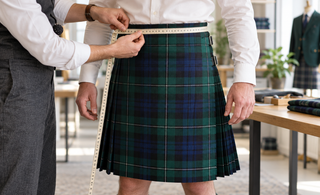
Ordering your first kilt is exciting, but choosing a size can feel confusing when your jeans label, tape measurement, and preferred waistband position all give different answers. A reliable starting point is to measure your body at the exact place where you intend to wear the kilt, then check the instructions for the particular style you are buying.
This guide explains how to measure your waist, hips, and kilt length at home, how to avoid common sizing mistakes, and what information to send before ordering a custom kilt.
What you need before you start
Use a flexible tailor’s tape, a mirror, and a piece of paper or your phone to record the results. A helper makes length measurements easier because bending to read the tape can change your posture. Wear light clothing, stand naturally, and keep your stomach relaxed. Check whether the order form uses inches or centimetres before entering any numbers.
A rigid metal tape is awkward for body measurements. If a soft tape is unavailable, use non-stretch string and measure it against a ruler afterward. Do not use elastic cord, which can stretch and produce an inaccurate result.
Choose the waistband position first
Your waistband position affects both waist circumference and finished length. A traditional Highland kilt is commonly worn around the natural waist, higher than many modern trousers. Casual and utility styles may sit differently depending on their construction and your preference. Follow the product’s measuring instructions rather than assuming every kilt is worn at the same height.
Mark the intended waistband level with a loose ribbon or a belt. Look in a mirror and check that it sits level around your body. Keep this reference point in place while taking the remaining measurements. If you change the waistband position after measuring, repeat both the waist and length measurements.
Step 1: Measure your waist
Wrap the tape around your body at the chosen waistband level. Keep it horizontal at the front, sides, and back. The tape should rest against your clothing or skin without digging in. Breathe normally and record the measurement while standing comfortably.
Repeat the measurement to check consistency. If the numbers differ, check the tape position and your posture before deciding which figure to use. A mirror or helper can reveal a tape that has slipped upward at the back.
Do not order from your jeans size alone. Clothing labels vary between brands, and the waist position of a kilt may differ from that of your trousers. There is no reliable universal number to add to a jeans label. An actual body measurement gives the maker more useful information.
Step 2: Measure your hips and seat
Measure around the fullest part of your seat and hips. Stand naturally with the tape level, checking the back in a mirror or asking a helper to read it. Avoid pulling the tape tight or placing it only across the upper hip bones if that misses the fullest part.
The seat measurement helps the maker understand how the garment should fit below the waistband. Two people with the same waist can have different hip measurements, so providing both numbers is especially useful for a custom order. Record what you actually measure rather than changing the hip figure to fit an assumed waist-to-hip ratio.
Step 3: Measure your kilt length
Measure vertically from the intended top of the waistband to your chosen hem position. For traditional men’s Highland dress, the knee is a common reference, but the exact finish should follow the maker’s guidance and your preferred look. Use the actual product instructions if they specify a particular point on the knee.
Stand straight and look ahead while a helper measures. Bending forward can shorten the reading or move the starting point. Take the length at the side and explain where you want the hem to finish. A reference photo can be helpful, but it should accompany a measured length rather than replace it.
Do not choose a length from height alone. People of the same height can have different torso and leg proportions. Equally, do not assume a length that suited another person will suit you. Measure from your own waistband position to your own chosen hem.
Traditional kilts and utility kilts: why the instructions matter
The basic measurements are similar, but sizing systems can differ between styles. A traditional tartan kilt, a cotton utility kilt, and a leather kilt may have different adjustment systems, waistband shapes, and available lengths. Before ordering, check whether the listed size refers to a body measurement, a garment measurement, or a size range.
Some kilts have buckle adjustment or an elastic section. That flexibility should not replace careful measuring. The useful adjustment range depends on the particular garment. Ask about the chosen model if your measurement falls between listed sizes.
Should you add an extra inch for comfort?
Do not automatically add an inch to every measurement. Different makers account for ease in different ways, and adding allowance yourself can lead to a loose garment if the maker adds it again. Send your actual relaxed body measurements and explain your comfort preference.
If you have already agreed an extra allowance with the seller, clearly distinguish the measured figure from the requested finished size. For example: “My measured waist at the intended waistband is 39 inches; please confirm whether the order should be entered as 39 or 40.” This prevents a comfort adjustment from being mistaken for a fresh body measurement.
Common mistakes to avoid
- Entering a trouser label instead of measuring your body.
- Taking the waist low down but measuring the length from a higher point.
- Holding your breath or pulling your stomach in.
- Letting the tape slope around the hips or waist.
- Rounding several measurements before checking them.
- Mixing inches and centimetres in the same order.
- Assuming every kilt has the same buckle adjustment range.
A simple measurement record to send with your order
Write down your waist circumference at the intended waistband, fullest hip/seat circumference, and length from the waistband to the preferred hem. Add the unit, selected style, and a short note about where you intend to wear the waistband. Your height can provide context, but it should not replace a direct length measurement.
For a custom order, ask which additional measurements the maker needs. A jacket or waistcoat requires its own measurements; a correctly measured kilt waist does not establish the size of the matching upper garments. If helpful, send clear measuring photos showing the tape position and reading.
Frequently asked questions
Can I measure myself without a helper?
Yes, a mirror can help you check waist and hip measurements. Length is easier with assistance because you need to stay upright while someone reads the tape. Repeat the readings before ordering.
What if I am between two available waist sizes?
Send the exact measurement and ask about the adjustment range of the chosen kilt. Avoid a blanket rule to always size up or always size down because construction and sizing conventions differ.
Can I wear my kilt below my belly button?
Explain your preferred waistband position before ordering and confirm that it suits the selected design. Take the waist and length from that same position so the maker receives consistent information.
Should I measure again before an important event?
Yes, especially if the original measurements are old or your size has changed. Confirm the order details before production, and allow time to try the outfit on before the event rather than depending on a last-minute fitting.
Ready to choose your kilt?
Explore Kilt Experts and check the measuring instructions for the style you want. A consistent waistband position, accurate body measurements, and a clear preferred length give your order a stronger starting point. If any measurement is uncertain, contact us before placing a custom order so the details can be clarified.