
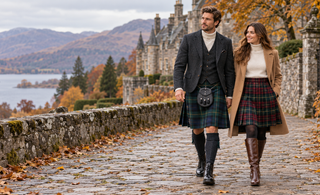
Tartan is one of the strongest patterns for fall and winter 2026, and the kilt is its most distinctive expression. Checks are appearing across seasonal wardrobes, while kilt-inspired skirts are being paired with knitwear, boots, tailored jackets, and heritage outerwear. The good news is that you do not need to treat a tartan kilt as a costume or save it only for a formal Scottish event. With the right layers, it can become one of the most practical and memorable pieces in a cold-weather wardrobe.
This guide explains how to style a tartan kilt for fall and winter without losing its traditional character. You will learn how to choose the right fabric weight, add warmth without hiding the kilt, coordinate tartan colours, select footwear and accessories, and build outfits for casual days, weddings, Highland events, festivals, and holiday gatherings.
Why tartan kilts work so well in fall and winter
Tartan naturally suits the colder months. Its intersecting colours add depth to outfits that might otherwise rely on plain black, grey, brown, or navy. A traditional kilt also has structure and movement, so it looks polished even when combined with practical winter layers.
Seasonal styling is especially effective because tartan connects easily with materials such as wool, tweed, leather, suede, flannel, and chunky knitwear. These textures make an outfit feel warm and intentional. The result can be traditional, rugged, elegant, or fashion-forward depending on the pieces you choose.
For classic options, browse our tartan kilts for men or explore tartan kilts for women.
Start with the right kilt fabric and weight
Your kilt is the foundation of the outfit. For cooler weather, a fuller and heavier fabric usually hangs better, blocks more wind, and looks more substantial beside coats and boots. An 8-yard kilt with deep pleats creates a traditional silhouette and offers more fabric around the body than a lighter casual design.
A 16 oz acrylic-wool tartan is a practical cold-season choice because it provides a rich appearance and a sturdy drape. If you want a classic example, this Thompson Dress Blue 8-yard, 16 oz tartan kilt is available in multiple tartans. Dark green, navy, burgundy, charcoal, brown, and muted ancient tartans are particularly easy to style in fall and winter.
Lighter kilts can still work, but they may need smarter layering. Instead of adding bulk directly under the kilt, concentrate warmth on the upper body, feet, and outerwear. That keeps the traditional line of the garment clean.
How to choose a fall or winter tartan
You do not have to wear a dark tartan in cold weather, but deeper colours are naturally easier to coordinate with seasonal clothing. Consider these options:
- Green and navy tartans: pair beautifully with charcoal tweed, cream knitwear, black leather, and dark brown boots.
- Red and burgundy tartans: work with black, camel, chocolate brown, navy, and winter white.
- Ancient or weathered tartans: their softened colours suit suede, tan leather, olive outerwear, and rustic textures.
- Grey and black tartans: create a clean modern base for monochrome layers or one strong accent colour.
- Blue tartans: coordinate well with navy jackets, oatmeal knits, grey coats, and polished black footwear.
If you are selecting a kilt for the first time, accurate measurements matter more than trend. Read our kilt measurement guide before ordering.
The best upper-body layers for a winter kilt outfit
1. Fine-gauge turtleneck
A fitted turtleneck is one of the simplest ways to make a kilt feel current. Cream, charcoal, black, navy, or dark green creates a clean base without competing with the tartan. Choose a fine or medium knit so the garment sits neatly beneath a jacket.
2. Traditional kilt shirt
A Jacobite or Ghillie-style shirt creates a relaxed heritage look for indoor gatherings, themed events, and milder fall weather. When temperatures fall, add a waistcoat or textured jacket rather than wearing an oversized coat directly over a loose shirt.
3. Oxford or dress shirt
A crisp white, light blue, or subtle striped shirt works for weddings, dinners, and formal occasions. Add a tie or bow tie only when the level of formality requires it. For a coordinated outfit, pull one quieter colour from the tartan rather than trying to match the brightest stripe.
4. Chunky knit sweater
A crew-neck or roll-neck sweater can create a comfortable everyday outfit. The best versions end close to the waist or are fitted enough to preserve the shape of the kilt. Very long, baggy sweaters can hide the waistband and make the proportions feel heavy.
5. Waistcoat and tweed jacket
Tweed and tartan belong naturally together. A charcoal, brown, olive, or grey waistcoat adds warmth while keeping the outfit tailored. For an easy complete look, the Grey Tweed Wool Kilt Outfit for Men combines traditional Highland style with a cold-weather colour palette.
Which jackets and coats look best with a tartan kilt?
The ideal outer layer depends on where you are going and how much of the kilt you want to show.
- Tweed kilt jacket: the most natural choice for weddings, Burns Night, dinners, and smart daytime events.
- Argyle jacket: versatile enough for daywear and semi-formal occasions.
- Prince Charlie jacket: best reserved for formal evening dress.
- Short wool coat: offers warmth without covering the entire kilt.
- Field jacket or waxed jacket: works with muted tartans for outdoor events and country styling.
- Leather jacket: creates a stronger modern look, especially with black, grey, red, or dark green tartan.
- Long overcoat: suitable for travel and very cold conditions; remove it indoors so the kilt becomes the focus again.
Keep the coat shape relatively clean. Too many large pockets, straps, or contrasting panels can fight with the tartan. A plain outer layer lets the pattern remain the visual centre.
What to wear on your legs in cold weather
Traditional kilt hose provide useful warmth from the calf downward and help balance the exposed knee. Choose a pair that feels substantial enough for the temperature. Cream, charcoal, black, lovat green, navy, and dark red are reliable options.
Flashes should coordinate with the tartan or another accessory without becoming an exact colour overload. For a simple outfit, match the flashes to one of the tartan's secondary colours.
Women styling tartan kilt skirts can add opaque tights, fleece-lined tights, or tall boots. Black tights create a clean modern look; chocolate, burgundy, or dark green can produce a softer seasonal palette. The skirt and tights should remain distinct enough that the tartan pattern is still visible.
Explore our kilt hose and socks for traditional options.
Best shoes and boots for fall and winter
Cold-weather footwear should look appropriate and provide reliable grip. The most useful choices are:
- Ghillie brogues: traditional and suitable for formal indoor events.
- Polished derby shoes: an understated option for dinners and smart occasions.
- Leather ankle boots: practical for daily wear and outdoor gatherings.
- Country or hiking-style boots: useful for Highland games, festivals, and uneven ground.
- Knee-high boots: a strong pairing for women's tartan kilt skirts.
Black footwear works with cool-toned tartans and formal outfits. Dark brown, tan, or oxblood leather complements ancient, weathered, olive, and burgundy patterns. Avoid delicate soles when rain, leaves, frost, or snow are likely.
How to coordinate a sporran, belt, and kilt pin
Accessories complete a Highland outfit, but winter styling already includes several textures. Keep the front of the outfit organised rather than adding every possible detail.
A leather day sporran suits casual layers, field jackets, and boots. A semi-dress sporran offers a middle ground for weddings and holiday events. A dress sporran with more decorative metalwork belongs with formal evening attire. Browse our sporran collection to compare styles.
Match the general metal tone of the buckle, sporran hardware, and kilt pin. They do not need to be identical, but silver with silver or antique finishes with similar finishes create a more polished result. Our kilt pin placement guide explains where the pin should sit and why it must pass through the outer apron only.
For brooches, belts, flashes, fly plaids, buckles, and other finishing pieces, visit the kilt accessories collection.
10 tartan kilt outfit ideas for fall and winter 2026
1. Classic Highland wedding guest
Wear a green or navy tartan kilt with a white shirt, charcoal tweed jacket, matching waistcoat, cream hose, black brogues, and a semi-dress sporran. Add a wool overcoat for travel.
2. Modern monochrome
Combine a grey-and-black tartan with a black turtleneck, black leather jacket, charcoal hose, minimal silver pin, and polished black boots.
3. Autumn country look
Pair a weathered tartan with an olive field jacket, oatmeal knit, brown leather day sporran, lovat hose, and sturdy dark brown boots.
4. Holiday gathering
Choose a red or burgundy tartan with a cream roll-neck sweater, black jacket, black hose, and simple leather accessories. The tartan provides enough festive colour without novelty details.
5. Smart casual dinner
Wear a navy tartan kilt with a pale blue shirt, textured grey waistcoat, leather ankle boots, and an understated sporran. Skip the heavy jacket indoors.
6. Highland festival outfit
Use a traditional 8-yard kilt with a warm shirt, short wool jacket, practical hose, weather-resistant boots, and a securely fastened day sporran.
7. Women's heritage chic
Style a knee-length tartan kilt skirt with a fitted cream turtleneck, camel coat, opaque tights, and knee-high brown boots. Keep jewellery simple.
8. Women's modern evening look
Pair a dark tartan skirt with a black fitted top, structured blazer, black tights, sleek ankle boots, and one statement pin or brooch.
9. Cold-weather travel outfit
Choose a comfortable tartan kilt, merino base layer, compact knit, short insulated coat, thick hose, and boots with grip. Carry formal shoes separately if attending an event.
10. Burns Night-ready outfit
Combine a traditional tartan with an Argyle or Prince Charlie jacket according to the dress code, a crisp shirt, appropriate neckwear, dress sporran, cream hose, and polished brogues.
How to mix tartan with other patterns
Tartan is already visually active, so pattern mixing requires restraint. Use one dominant tartan and one quieter secondary pattern. A subtle herringbone tweed jacket works because its texture reads almost like a solid from a distance. A fine stripe on a shirt can also work if its colours remain calm.
Avoid combining two large checks of similar scale. If your coat is checked, keep the shirt, knitwear, hose, and accessories plain. When in doubt, build the outfit from solid colours already present in the tartan.
How to stay warm without making the outfit bulky
- Use a thin thermal or merino base layer beneath the shirt or sweater.
- Choose a fitted waistcoat for core warmth.
- Wear a jacket that ends near the hip so the kilt remains visible.
- Select heavier hose and weather-appropriate boots.
- Add a scarf in a plain colour rather than another competing plaid.
- Use a long overcoat outdoors and remove it at the venue.
- Keep indoor layers breathable so you do not overheat.
The aim is to distribute warmth across several light or medium layers. One oversized sweater or coat can distort the proportions, while multiple controlled layers preserve the kilt's silhouette.
Common winter kilt styling mistakes
- Matching every accessory exactly to the tartan.
- Wearing a coat that is bulky at the waist and hides the kilt completely.
- Using summer footwear on wet or icy ground.
- Combining multiple large check patterns.
- Choosing hose that are too thin for the weather.
- Adding so many accessories that the outfit looks costume-like.
- Ignoring the event's dress code.
- Ordering the kilt using trouser-waist measurements without checking the intended wearing position.
Frequently asked questions
Are kilts warm enough for winter?
A substantial kilt can be comfortable in cool weather, especially when combined with a thermal upper layer, jacket, kilt hose, and suitable footwear. Conditions vary, so add a coat and weather protection when necessary.
Can I wear tights under a kilt?
Women commonly wear opaque or thermal tights with tartan kilt skirts. For traditional men's Highland dress, kilt hose are the standard visible legwear. Personal comfort and the nature of the event should guide any additional concealed layer.
What jacket colour works with most tartans?
Charcoal grey is one of the most versatile choices. Dark brown, navy, black, and olive also work well, depending on the colours in the tartan.
Can I wear boots with a traditional kilt?
Yes. Clean leather boots are suitable for casual wear, outdoor events, and cold weather. Formal evening occasions generally call for dressier footwear such as polished brogues.
Can women wear tartan kilts in 2026?
Absolutely. Kilt skirts are especially relevant to fall and winter 2026 styling and can be worn with knitwear, blazers, wool coats, tights, and boots.
Do I need Scottish ancestry to wear tartan?
No. Many tartans are associated with districts, countries, organisations, or general fashion rather than a particular family. Wear the garment respectfully and choose a pattern that has meaning or visual appeal to you.
Final fall and winter kilt checklist
- Choose a tartan and fabric weight suited to the temperature.
- Use solid-colour knitwear or shirts to balance the pattern.
- Add a fitted waistcoat, tweed jacket, or clean wool coat.
- Select warm hose, tights, or boots appropriate to the outfit.
- Coordinate metal and leather finishes without overmatching.
- Keep one accessory or tartan as the main focal point.
- Measure correctly before ordering.
- Adjust the outfit to the dress code and weather forecast.
A tartan kilt already has heritage, colour, and personality. Fall and winter styling should support those qualities, not bury them. Start with the kilt, repeat one or two of its colours through your layers, add seasonal texture, and finish with practical footwear and coordinated accessories.
For more outfit combinations, read our complete guide to what to wear with a kilt, then explore the latest tartan kilts and Highland accessories at Kilt Experts.