
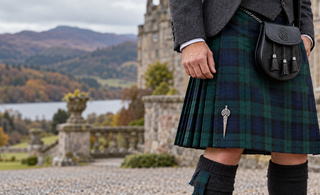
A kilt pin may be small, but it is one of the first details people notice in Highland dress. Worn correctly, it adds a little weight to the front apron, brings balance to the outfit, and gives you an easy way to express personal style. Worn incorrectly, it can pull the fabric, restrict the natural movement of the kilt, or even cause damage.
This complete guide explains how to wear a kilt pin, where it should be placed, what it is designed to do, and how to match it with both traditional and modern kilt outfits. Whether you are dressing for a wedding, a Highland gathering, a formal dinner, a festival, or simply wearing a kilt for the first time, the same basic rules apply.
Quick answer: where does a kilt pin go?
A kilt pin is normally worn on the lower right-hand side of the outer front apron. Attach it through the outer apron only. Do not use it to fasten the outer apron to the layer underneath.
A practical starting point is approximately 2 to 4 inches above the bottom hem and around 1.5 to 2 inches in from the fringed edge. The exact position can vary slightly according to your height, kilt length, tartan pattern, and the size of the pin. The finished placement should look balanced rather than crowded against the hem or edge.
What is a kilt pin for?
The modern kilt pin has two main purposes: it adds decorative character and gives the outer apron a small amount of weight. That weight helps the apron hang neatly and reduces excessive movement in a breeze. It is not supposed to lock the kilt closed.
This distinction matters. A properly made kilt is secured at the waist by its straps, buckles, or other built-in fastening system. The pin sits on the face of the apron as an accessory. If you pin through both front layers, you can change the way the kilt hangs and place unnecessary tension on the cloth whenever you sit, walk, or turn.
Think of the kilt pin as Highland jewellery with a light practical role—not as a safety fastener holding the garment together.
How to put on a kilt pin step by step
1. Lay the kilt flat
It is usually easier and safer to attach the pin before putting the kilt on. Lay the garment on a clean, flat surface with the outer apron facing upward. Smooth the fabric gently without stretching it.
2. Identify the outer apron
The outer apron is the flat front panel visible when the kilt is worn. The pin belongs near the lower corner on the wearer's right side. Check the tartan lines and look for a position that feels visually balanced.
3. Choose the placement
Begin about 2 to 4 inches above the hem and 1.5 to 2 inches inward from the fringed edge. Larger pins may need a little more breathing room. A compact pin can sit slightly closer to the edge, provided it does not appear cramped.
4. Open the pin carefully
Support the fabric with one hand and guide the pin through only the outer layer. Avoid forcing a thick point through the weave. If the pin resists, move a fraction to one side and try again rather than enlarging the same hole.
5. Secure and inspect it
Close the clasp completely. Lift the outer apron slightly to confirm that the pin has not caught the inner apron. When you put the kilt on, check that the pin hangs straight, does not pull the tartan out of line, and has enough clearance from the hem.
The most common kilt pin mistake
The biggest mistake is pinning the outer apron to the inner layer. Many first-time wearers assume that the accessory is meant to keep the front closed. In reality, joining both layers can restrict the swing of the kilt and put repeated stress on the fabric.
Other common errors include:
- placing the pin too close to the bottom hem;
- positioning it too close to the fringed edge;
- using a very heavy pin on lightweight material;
- forcing a blunt or oversized pin through a dense weave;
- wearing a loose clasp that can open while walking;
- choosing a large design that overwhelms the tartan.
If you are still choosing your garment, start with a correctly fitted kilt. Our kilt measurement guide explains how to measure the waist, hips, and desired length before ordering.
How to use the tartan pattern as a guide
Tartan makes accurate placement easier because its vertical and horizontal lines create a natural grid. Try lining the main stem of the pin with a vertical stripe. Then compare its distance from the hem with a nearby horizontal stripe. This produces a cleaner, more intentional look than placing it between lines at random.
Do not become so focused on symmetry that you ignore proportion. Two kilts made in different tartans may need slightly different pin positions because their setts—the repeated pattern blocks—are different sizes. Step back, view the full front of the kilt, and make sure the pin complements the overall pattern.
Should a kilt pin be straight or angled?
Vertical placement is the safest and most traditional-looking choice. It works particularly well with sword, thistle, stag, Celtic knot, and clan-crest designs. A slight angle can create a relaxed contemporary effect, but it should still look deliberate and remain securely fastened.
For weddings, formal dinners, ceremonies, and pipe-band-inspired outfits, keep the pin upright. For modern fashion or casual events, a modest angle may work if the design and tartan support it.
Choosing the right kilt pin style
Traditional Celtic designs
Celtic knots, thistles, claymores, stags, lions, and clan-inspired emblems pair naturally with traditional tartan kilts. They add detail without making the outfit look overly modern. Silver-tone finishes are especially versatile because they coordinate easily with buckles, jacket buttons, brooches, and sporran hardware.
Formal and wedding pins
For a wedding or evening event, choose a refined pin with a polished finish and controlled detail. Match its metal tone with the rest of your Highland accessories. The pieces do not need to be identical, but silver with silver generally looks more cohesive than mixing several unrelated finishes.
If you are building the entire look, browse our kilt accessories collection and use our complete guide to what to wear with a kilt to coordinate every layer.
Minimal modern pins
A clean geometric pin, simple bar, or understated metal design suits a modern kilt and a pared-back outfit. Minimal pins also work well when the tartan itself has bright colours or a bold oversized sett. Browse modern kilts for men if you prefer a contemporary silhouette.
Statement and personalised pins
A statement pin can represent heritage, military service, a favourite symbol, or an important occasion. It can also become a keepsake. The key is restraint: allow one main accessory to lead. If the pin is highly decorative, choose a simpler sporran and belt buckle so the outfit does not compete with itself.
How to match a kilt pin with the rest of the outfit
A polished Highland outfit feels connected from top to bottom. Use these simple matching principles:
- Metal finish: coordinate the pin with your buckle, brooch, jacket buttons, and sporran hardware.
- Formality: choose a simple pin for daytime or casual wear and a more refined design for formal evening dress.
- Scale: larger builds and heavier kilts can carry a bigger pin; lightweight kilts usually look better with a smaller accessory.
- Tartan contrast: a bright silver pin stands out on dark tartan, while an antique finish can soften a lighter or earth-toned sett.
- Theme: repeat one motif—such as a thistle or Celtic knot—rather than combining several unrelated symbols.
The sporran is the largest accessory on the front of a traditional outfit, so consider it first. Explore our sporran collection, then choose a kilt pin that complements rather than competes with it. Finish the lower half with suitable kilt hose and footwear.
Kilt pin ideas for different occasions
Scottish wedding
Choose a polished Celtic or clan-inspired pin in a finish that matches the jacket and sporran hardware. Keep it upright and neatly aligned with the tartan. If several members of a wedding party are wearing kilts, matching pins can create a unified look without making every outfit identical.
Highland games or outdoor festival
Select a secure, durable pin with a reliable clasp and moderate weight. Outdoor events involve more walking, sitting, and movement, so comfort and security matter more than an oversized decorative design.
Formal dinner or ceremony
A refined silver-tone pin suits a Prince Charlie or other formal jacket. Pair it with a dress sporran and well-finished accessories. Avoid novelty motifs unless the event specifically welcomes them.
Casual modern outfit
A minimal pin can make a tartan kilt feel current when worn with knitwear, a fitted shirt, boots, or a clean jacket. In 2026, heritage-inspired clothing and jewellery are being styled in increasingly personal ways, so traditional placement can coexist with modern design.
First complete kilt outfit
If you want coordinated pieces without selecting every accessory separately, consider a complete bundle. This 8-yard kilt deal with fly plaid, kilt pin, brooch, and flashes provides matching elements for a connected Highland look. You can also browse our tartan kilts for men to start with the main garment.
Can a kilt pin damage the fabric?
Any sharp accessory can damage cloth if it is attached carelessly, dragged through the weave, or repeatedly placed through the same stressed hole. Reduce the risk by using a well-finished pin, opening it fully, supporting the fabric while inserting it, and checking that the clasp is secure.
Avoid very heavy pins on lightweight tartan. Remove the pin before cleaning or storing the kilt, and never pull it free while the clasp is closed. If the kilt is rented, ask the hire provider before attaching a personal pin because some companies have specific rules.
How to care for and store a kilt pin
- Wipe the pin with a soft dry cloth after wear.
- Keep it away from moisture, fragrance, and harsh metal cleaners.
- Store it closed in a small pouch or lined box.
- Do not leave a heavy pin attached during long-term kilt storage.
- Inspect the hinge and clasp before every event.
- Remove it before professional cleaning.
Proper storage protects both the accessory and the tartan. It also prevents the pin from snagging the kilt, hose, fly plaid, or other garments packed beside it.
Frequently asked questions
Which side does a kilt pin go on?
It normally goes on the wearer's right-hand side, near the lower corner of the outer front apron.
How high should a kilt pin sit?
A common starting range is 2 to 4 inches above the hem. Adjust slightly for the length of the kilt, the size of the pin, and the tartan pattern.
Does a kilt pin hold the kilt closed?
No. It should pass through the outer apron only. The kilt's straps and buckles hold the garment in place.
Can I wear a kilt without a pin?
Yes. A kilt pin is a traditional and popular accessory, but the kilt can still be worn without one if the occasion, outfit, or personal preference calls for a simpler look.
Should the pin match the sporran?
It does not have to be an exact match, but coordinating the metal finish and level of formality creates a more polished outfit.
Can women wear kilt pins?
Yes. Kilt pins can be worn with women's tartan kilts and kilt-inspired skirts. Placement may vary with the garment's wrap direction and construction, so follow the visible outer apron and avoid pinning all layers together.
Final kilt pin checklist
- Place it on the lower right side of the outer apron.
- Start around 2 to 4 inches above the hem.
- Keep it approximately 1.5 to 2 inches from the fringed edge.
- Pin through the outer apron only.
- Use the tartan lines to create a neat visual alignment.
- Match the size and finish to the occasion and other accessories.
- Check the clasp before wearing the kilt.
- Remove the pin before cleaning or long-term storage.
Once you understand the placement, a kilt pin becomes one of the easiest ways to refine Highland dress. Keep it secure, proportional, and true to your personal style, and it will add character without disrupting the natural drape of the kilt.
Ready to complete your look? Explore Highland and kilt accessories at Kilt Experts.