
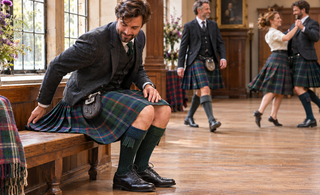
Wearing a kilt should feel natural, not nerve-racking. The garment was designed for movement, but its overlapping aprons, rear pleats and front-worn sporran make sitting, walking and dancing slightly different from doing the same things in trousers. A few simple habits will protect the pleats, keep the outfit neat and help you move confidently at weddings, Highland games, ceilidhs and everyday events.
This guide explains how to sit in a kilt, how to walk in a kilt and how to dance in a kilt without overthinking every step. It also covers cars, stairs, windy weather, sporran placement and the common mistakes that can spoil an otherwise well-fitted Highland outfit.
Quick Answer: How Do You Move Comfortably in a Kilt?
- To sit: move the sporran slightly aside, smooth the rear pleats with one hand and lower yourself onto the chair without bunching the fabric.
- To walk: stand tall and use your normal stride. A correctly fitted kilt should move freely without twisting around your waist.
- To dance: secure loose accessories, shift the sporran slightly to the side if needed and use comfortable, stable footwear.
- For modesty: keep your knees comfortably close when seated, especially in low chairs or across from other guests.
- After movement: re-centre the aprons and sporran, then let the pleats fall back into place naturally.
Start With the Right Kilt Fit
Good movement begins before you take a step. A kilt that is too loose can rotate around the body; one that is too tight can pull across the seat, restrict the stride and make the aprons flare. The waistband should sit securely at the natural waist, the aprons should lie flat at the front, and the pleats should hang cleanly at the back.
Traditional guidance places the hem around the middle of the kneecap when standing. Your body proportions and the kilt style still matter, so take accurate waist, seat and length measurements rather than relying on your trouser size. Our step-by-step kilt measuring guide explains where to place the tape and how to choose the correct drop.
Fabric and construction also affect how the garment moves. A substantial eight-yard kilt usually creates deep, flowing pleats, while a lighter kilt can feel easier for travel and warm indoor events. If you want a classic full-weight example, see the Rose Ancient 8-yard tartan kilt. For more context, compare pleating methods in our guide to knife, box and Kingussie pleats.
How to Sit in a Kilt: Step by Step
Sitting is the movement that worries first-time kilt wearers most. The goal is not to perform a ceremonial routine; it is simply to keep the pleats flat, the front covered and the sporran out of the way.
- Approach the chair normally. Stand close enough that the back of your legs can feel the edge. This prevents you from reaching backward or dropping suddenly.
- Move the sporran aside. Guide it slightly toward one hip or let it rise gently onto your lap as you sit. Do not trap a rigid sporran between your body and the chair.
- Smooth the pleats. Reach behind with one hand and sweep the pleated section downward. You are not lifting the kilt high; you are making sure the pleats are not folded underneath you.
- Lower yourself in control. Bend at the knees and sit smoothly rather than falling into the seat. Keep your torso upright and allow the kilt to settle.
- Arrange the front. Check that the outer apron still covers the inner apron and that the hem is even. Keep your knees comfortably together or angle both lower legs slightly to one side.
- Set the sporran comfortably. It can rest lightly on your lap or hang just in front of the seat, depending on the chair and its chain length.
When you stand, rise smoothly, let the sporran fall back to the centre and give the rear of the kilt a light downward brush. The pleats should release on their own. Avoid yanking the hem or shaking the garment dramatically.
Should You Cross Your Legs While Wearing a Kilt?
Crossing one thigh over the other can raise the front apron and reduce coverage. At a formal dinner, ceremony or stage-facing seat, it is usually neater to keep both knees close and cross only at the ankles if that feels comfortable. In a relaxed setting, adjust your position according to the chair, the kilt length and the people around you. The practical rule is simple: choose the position that keeps the apron flat and provides secure coverage.
Low Sofas, Bar Stools and Bench Seating
Low sofas require more care because the knees sit higher than the hips. Before lowering yourself, smooth the pleats and make sure the apron has enough room to drape. On a high stool, sit squarely rather than perching at an angle that twists the waistband. A flat bench is often easiest because you can reach behind and arrange the pleats without chair arms getting in the way.
How to Sit in a Car While Wearing a Kilt
Open the door fully, turn so the back of your legs faces the seat, move the sporran aside and smooth the pleats downward. Sit first, then rotate both legs into the vehicle together. Before closing the door, check that no fabric is caught near the sill. Wear the seat belt in its normal safe position; never move or loosen it for the sake of the outfit.
For a long journey, take occasional breaks and smooth the pleats when you get out. If you are travelling to a wedding, consider putting on a very formal jacket or delicate accessories after arrival so they stay crisp.
How to Walk in a Kilt
A well-fitted kilt does not require a special march. Walk with your normal stride, keep your shoulders relaxed and let the pleats open and close behind you. The weight of the fabric should produce a natural swing without exaggerated hip movement.
If the kilt begins to rotate, stop and check the fit rather than repeatedly pulling the aprons sideways. The centre line of the front apron should stay aligned with the centre of your body, and the pleats should remain behind you. Frequent twisting usually points to a loose waistband, an uneven fastening or a heavy accessory pulling to one side.
Walking Up and Down Stairs
Use the handrail when available and take a normal, controlled step. There is rarely a need to lift the front of a properly fitted knee-length kilt. On a steep or narrow staircase, place the full foot securely before transferring your weight. Check that long jacket tails, a fly plaid or a swinging sporran are not catching on nearby objects.
Footwear matters more than the kilt itself. Shoes should fit properly and grip the surface. If you are completing a formal outfit, browse kilt shoes and ghillie brogues, then use our ghillie brogue lacing guide so the laces stay secure without being wrapped too high.
Walking Outdoors and in Wind
Wind can lift any loose garment, so stay aware of the direction of strong gusts and use a hand to steady the outer apron when necessary. A sporran adds useful weight at the front. A kilt pin adds a little weight to the lower outer apron, but it should not fasten both apron layers together. Pinning through both layers restricts movement and can strain the fabric. See the correct position in our kilt pin placement guide.
For rain, wet grass or crowded outdoor events, move carefully and give yourself more space. Wool and wool-blend kilts can become heavier when damp, so allow the garment to dry naturally afterward and restore the pleats before storage.
How to Dance in a Kilt
Kilts are excellent for social dancing because the pleats allow plenty of movement. Whether you are joining a ceilidh, attending a wedding reception or simply stepping onto the dance floor, preparation matters more than complicated technique.
- Check every fastening. Confirm that the waist straps, belt, hose flashes and shoe laces are secure.
- Control the sporran. A heavy sporran can bounce during turns. Shift it slightly toward one hip or shorten the chain if the design allows.
- Remove fragile extras. If a brooch, chain or decorative accessory feels loose, store it safely before dancing.
- Give yourself space. Pleats move outward during fast turns. Leave room between dancers and follow the caller's instructions at a ceilidh.
- Use stable footwear. Choose shoes suitable for the floor and the event. Extremely slippery soles make turning difficult; heavy outdoor footwear can feel clumsy on a polished dance floor.
- Reset after a lively set. Re-centre the sporran, smooth the apron and let the pleats fall straight before returning to your seat.
Scottish country dancing, informal ceilidh dancing and Highland dancing are different traditions with different footwear and technique. If you are attending a class or organised event, follow the teacher's or venue's requirements rather than assuming that one shoe or outfit suits every style.
Can You Dance in a Utility Kilt?
Yes. A utility kilt can work well for casual dancing, festivals and active events, but loaded cargo pockets can swing and affect balance. Remove unnecessary items, close every snap or zip, and make sure detachable pockets are secured. The Black Watch tartan utility kilt with detachable pockets is one option for wearers who want traditional colour with practical storage.
For broader choices, compare men's tartan kilts with men's utility kilts. The best dancing kilt is the one that fits securely, leaves room through the seat and suits the formality of the occasion.
Managing the Sporran While Sitting and Moving
The sporran replaces trouser pockets, but its position changes slightly throughout the day. When standing, it normally hangs centred at the front. When sitting, it can move onto your lap or toward one side. During energetic dancing, many wearers rotate it just off-centre so it does not bounce directly against the body.
Do not overfill the sporran. A phone, wallet, keys and several bulky items can make it swing heavily, pull the chain unevenly and mark the front apron. Carry only essentials, distribute the weight evenly and check the closure before entering a busy dance floor. If you are unsure which design fits your event, read our sporran types and fit guide.
What Should You Wear Under a Kilt for Movement?
What you wear underneath is a personal choice, but comfort, modesty and the rules of the venue should guide the decision. Well-fitting underwear is the practical choice for hired garments, dancing, public seating and windy outdoor events. Choose breathable fabric that does not bunch at the waist or show below the hem.
There is no need to let folklore dictate an uncomfortable choice. Our detailed guide to what to wear under a kilt separates tradition from everyday etiquette.
Common Movement Mistakes to Avoid
- Sitting on folded pleats: bunched fabric becomes uncomfortable and can set unwanted creases. Smooth it downward first.
- Dropping into a chair: sudden movement can trap the sporran, twist the waistband and pull the aprons apart.
- Taking an exaggerated stride: a kilt already allows natural movement. Forced marching looks awkward and may make accessories swing.
- Crossing the legs too high: this can lift the apron and reduce coverage.
- Pinning both aprons together: a kilt pin belongs on the outer apron only.
- Dancing with full utility pockets: heavy items swing, strike the legs and distort the silhouette.
- Ignoring loose laces or chains: check the entire outfit before walking into a crowd or joining a dance.
- Constantly tugging the hem: discreetly reset the apron and sporran once, then let the garment hang naturally.
A Five-Minute Practice Routine Before an Event
If this is your first full day in Highland dress, put the complete outfit on at home and spend five minutes moving in it. Walk across the room, climb a few stairs, sit in a dining chair, stand again and make one or two gentle turns. Check the result in a mirror from the front, side and back.
This quick rehearsal reveals a loose strap, an overlong sporran chain, unstable footwear or a hem that feels shorter when seated. It also makes the basic movements automatic, so you can focus on the people and the occasion instead of the clothing.
Kilt Movement Etiquette by Occasion
Wedding or Formal Dinner
Sit with controlled movements, keep the apron neat and avoid placing a napkin inside the waistband. Follow the host and the venue's dress expectations. If you need help matching the rest of the outfit, use our complete guide to what to wear with a kilt.
Ceilidh or Reception
Secure accessories, keep the sporran slightly off-centre during lively sets and listen to the caller. It is better to dance a simple figure safely than to take large uncontrolled steps on a crowded floor.
Highland Games or Festival
Expect uneven ground, wind and long periods of walking. Prioritise stable shoes, a secure waistband and a lightly packed sporran. Utility kilts suit many casual festivals, while traditional tartan is ideal when heritage and ceremony are central to the event.
Travel and Sightseeing
Choose a kilt that stays comfortable for extended sitting and walking. Smooth the pleats before every long car, train or plane journey, and avoid crushing them under a bag or coat. Carry a small clothes brush for quick tidying.
Frequently Asked Questions
Do you lift a kilt before sitting down?
No. You do not need to lift the garment high. Simply use one hand to smooth the rear pleats downward and make sure they are not folded underneath you.
Where does the sporran go when you sit?
Move it slightly to one side as you lower yourself, then let it rest comfortably on your lap or just in front of the seat. Avoid sitting on it or crushing a rigid cantle against the chair.
Is it difficult to walk in a kilt?
A correctly fitted kilt should be easy to walk in. Use your normal stride. If the kilt twists, pulls across the seat or restricts the legs, recheck the fastening and measurements.
Can you run in a kilt?
Short, practical movement is possible, especially in an active or utility design, but secure the sporran and pockets first. For organised sport, follow the event rules and wear purpose-appropriate clothing and footwear.
How do you keep a kilt down in the wind?
Face or angle yourself thoughtfully toward strong gusts, use a hand to steady the outer apron when necessary, and wear the sporran correctly. A properly placed kilt pin adds weight to the outer apron but should never pin both layers together.
Can you wear a kilt all day?
Yes. Accurate measurements, suitable fabric weight and comfortable footwear make the biggest difference. During long seated periods, stand occasionally and smooth the pleats so they do not remain compressed.
Should the pleats open when you walk?
Yes. Pleats are meant to flex with your stride and then settle back into vertical folds. Natural movement is a sign that the kilt has room to work; permanent flaring or twisting may indicate a fit issue.
Move With Confidence
The secret to comfortable kilt movement is simple: start with a secure fit, protect the pleats, control the sporran and move naturally. Smooth the pleats before sitting, use an ordinary confident stride and secure loose accessories before dancing. After a few minutes, these habits become automatic.
A kilt should help you enjoy the occasion, not distract you from it. Choose the right style, practise once at home and then wear it with confidence—whether you are taking your seat at dinner, walking into a ceremony or joining your first ceilidh.