
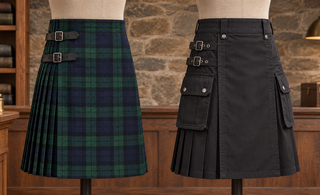
If you are choosing between a traditional kilt and a utility kilt, the simplest answer is this: choose a traditional tartan kilt when heritage, ceremony and a formal Highland silhouette matter most; choose a utility kilt when pockets, movement and everyday practicality matter more.
That quick rule solves many buying decisions, but it is not the whole story. Modern kilts now cover everything from lightweight tartan styles to rugged cotton designs and hybrid kilts that combine tartan panels with cargo pockets. The right choice depends on where you will wear it, how formal the event is, what you need to carry and how much maintenance you want.
This traditional kilt vs utility kilt guide compares the two styles by fabric, construction, pockets, formality, comfort, fit, care and value. By the end, you will know which kilt belongs in your wardrobe—or whether a hybrid is the better middle ground.
Traditional Kilt vs Utility Kilt: Quick Comparison
| Feature | Traditional Kilt | Utility Kilt |
|---|---|---|
| Main purpose | Heritage, formal wear and cultural occasions | Everyday wear, festivals, active use and practical storage |
| Typical fabric | Wool, acrylic wool or another woven tartan fabric | Cotton, cotton canvas, denim or other durable modern fabric |
| Pattern | Clan, district or universal tartan | Usually a solid colour, although tartan and hybrid versions exist |
| Pockets | Usually none; a sporran provides storage | Usually cargo, detachable or integrated pockets |
| Hardware | Discreet buckles and leather straps | Snaps, D-rings, buckles, chains or detachable straps, depending on the design |
| Formality | Best for weddings, ceremonies and formal Highland dress | Best for casual and practical settings |
| Styling | Often worn with a sporran, hose, flashes and formal footwear | Often worn with a simple shirt or tee, belt and boots |
| Care | Depends on fabric; wool generally needs specialist care | Often easier to clean, but always follow the garment label |
| Best first choice for | A wedding, formal event or meaningful tartan purchase | Frequent casual wear, storage and freedom of movement |
What Is a Traditional Kilt?
A traditional kilt is a tailored wrap garment made from tartan cloth, with overlapping front aprons and pleats at the back and sides. It is the style most people picture when they think of Scottish Highland dress. The tartan may represent a clan, district, organization or universal design, although you do not need a clan connection to wear every available tartan.
Traditional kilts are defined as much by their construction and styling as by their pattern. They commonly use leather fastening straps, a clean front apron and carefully aligned pleats. Formal versions may contain more cloth and deeper pleating, creating greater swing, weight and visual presence.
Yardage makes a noticeable difference. A lighter 5-yard kilt can be comfortable for travel, warmer climates and occasional wear, while an 8-yard kilt gives a fuller, more formal drape. If that decision is part of your search, read our 5-yard vs 8-yard kilt guide.
Browse the current men’s tartan kilts to compare traditional cuts, weights and tartans. For a heavyweight example, the Scottish Traditional Rose Ancient 8-yard, 16 oz tartan kilt shows the fuller construction many buyers want for formal occasions.
What Is a Utility Kilt?
A utility kilt is a modern, functional interpretation of the kilt silhouette. It keeps the wrap front and pleated structure but usually replaces formal tartan cloth with cotton, canvas, denim or another durable fabric. Its defining feature is practical storage: cargo pockets, removable pouches or integrated compartments are common.
Utility kilts may also use snaps, large belt loops, D-rings and adjustable side straps. These details give the garment a more casual, industrial or contemporary appearance. They are useful for everyday activities, festivals, travel and jobs where the dress code and safety rules permit this type of clothing.
A utility kilt is not protective equipment by default. Pockets and rugged fabric do not automatically make a garment suitable for construction sites, workshops or machinery. If you plan to wear one at work, check the employer’s dress code, required personal protective equipment and any rules about loose fabric or metal hardware.
Explore utility kilts for men for functional designs. Buyers who want tartan plus storage can also consider the Black Watch Modern tartan utility kilt with detachable pockets, which bridges the two categories without pretending they are identical.
The Biggest Differences Between Traditional and Utility Kilts
1. Heritage and purpose
The traditional kilt is closely associated with Highland dress, family and regional tartans, weddings, formal dinners, commemorations and cultural events. Its purpose is not merely practical; it can communicate identity, respect for an occasion and connection to Scottish tradition.
The utility kilt was developed around modern needs. It emphasizes accessible storage, easy movement and everyday styling. It can still be meaningful to the wearer, but it does not carry the same formal language as a traditional tartan kilt.
2. Fabric and structure
Traditional kilts are normally made from woven tartan fabric. Depending on the product, that may be wool, acrylic wool or another woven blend. Heavier cloth often hangs with more authority and holds deep pleats well, while lighter cloth can feel cooler and easier to pack.
Utility kilts are commonly made from cotton or cotton canvas. These fabrics support cargo pockets and metal hardware and can give a firmer, workwear-inspired shape. Some designs use denim, leather or mixed materials. Because materials vary widely, always use the product’s fabric details and care label rather than assuming every utility kilt can be washed the same way.
3. Pockets and storage
This is the clearest practical difference. A traditional kilt usually has no built-in trouser-style pockets. The sporran hangs at the front and holds essentials such as keys, cards and a phone. The result is a clean silhouette that works especially well with formal Highland accessories.
A utility kilt normally puts storage on the garment itself. Side cargo pockets can be easier to reach and may carry more than a small sporran. Detachable pockets offer extra flexibility: remove them for a cleaner appearance or add them when function matters.
If you already own a traditional kilt, the kilt accessories collection can help you build a complete outfit around it.
4. Formality
For black-tie Highland dress, a traditional tartan kilt is the dependable choice. It coordinates naturally with a Prince Charlie jacket, dress sporran, kilt hose, flashes and formal shoes. For daytime weddings and semi-formal events, a tartan kilt with an Argyll or tweed jacket is also a strong option.
A utility kilt is usually casual. It can work at informal celebrations, festivals, concerts, meetups and relaxed weddings when the host’s dress code allows it. However, cargo pockets and exposed hardware can look out of place at a formal ceremony. When in doubt, ask the organizer or choose traditional tartan.
5. Styling requirements
A traditional kilt often looks most complete with classic Highland accessories. The occasion determines how many you need: a casual outfit may use a simple shirt, day sporran and boots, while a formal outfit adds a jacket, waistcoat, hose, flashes and dress footwear.
A utility kilt needs fewer specialized pieces. A fitted T-shirt, henley, work shirt or casual button-down can be enough. Boots are common, but clean sneakers may suit a relaxed outfit. Because storage is built in, a sporran is usually optional and can compete visually with cargo pockets.
6. Movement and comfort
Both styles can be comfortable when correctly measured. Pleats support stride and airflow, and the wrap construction avoids the tight inner-leg seams of trousers. The main comfort differences come from fabric weight, waistband position, pocket load and fit.
A traditional kilt is commonly measured to sit higher than ordinary trousers. A utility kilt may be designed for the natural waist or a lower position, depending on the maker. Never rely only on your jeans size. Measure where the specific kilt is intended to sit, then confirm the hip and drop length. Our kilt measurement guide explains the process.
7. Care and maintenance
Care starts with the fabric, not the style name. A wool tartan kilt usually benefits from airing, gentle brushing and occasional professional cleaning. Avoid machine washing or tumble drying wool unless the manufacturer explicitly permits it. Store the garment dry, support the pleats and protect natural fibers from moths.
Cotton utility kilts may be easier to clean, but pockets, leather trim and metal hardware can change the instructions. Empty and secure removable parts before cleaning. Close fasteners to prevent snagging, and avoid high heat unless the label approves it. A tartan utility kilt made from acrylic wool may require different care from a plain cotton model.
Which Kilt Is Better for a Wedding?
For most weddings, the traditional tartan kilt wins. It photographs beautifully, matches established Highland dress codes and can be styled from smart daytime wear to full formal dress. It also gives the wearer a meaningful way to incorporate a family, regional or favorite universal tartan.
Choose a traditional kilt for:
- the groom or wedding party at a formal or semi-formal ceremony;
- black-tie Highland dress;
- church, castle, hotel or heritage-venue weddings;
- an occasion where tartan has family significance; or
- a coordinated outfit with jacket, waistcoat and sporran.
A utility kilt can suit a casual outdoor wedding, festival-style celebration or nontraditional dress code, especially when the couple has approved the look. Keep the styling clean: choose dark neutral fabric, avoid overloading the pockets and pair it with a crisp shirt and polished footwear.
Which Kilt Is Better for Work, Festivals and Everyday Wear?
For practical daily use, the utility kilt usually has the advantage. Pockets reduce the need for a separate bag or sporran, durable fabric handles frequent wear, and casual styling makes it easy to combine with clothes you already own.
A utility kilt is often the better option when you want:
- built-in storage for a phone, wallet and small essentials;
- a casual outfit for festivals, concerts or Highland games spectatorship;
- a modern alternative to shorts or trousers in warm weather;
- a garment that pairs naturally with boots and everyday shirts; or
- a kilt you expect to wear frequently rather than only at ceremonies.
For a style that keeps the color of tartan while adding removable storage, compare the Royal Stewart tartan utility kilt with detachable pockets. For plain or more contemporary designs, browse modern kilts for men.
What About Hybrid Kilts?
A hybrid kilt combines elements from both categories. It may use a solid cotton base with tartan pleats or panels, plus cargo pockets, straps and hardware. This provides a visible tartan accent without giving up the utility features many buyers want.
Hybrid kilts are a strong option for festivals, casual gatherings, themed events and personal style. They are not a substitute for formal Highland dress, but they are often the most satisfying compromise for someone who finds a plain utility kilt too modern and a traditional kilt too specialized.
See the hybrid kilt collection if your answer to “traditional or utility?” is genuinely “both.”
Traditional Kilt vs Utility Kilt by Climate
Climate matters because fabric weight can determine whether you enjoy wearing the garment for a full day.
Warm weather
A lightweight traditional kilt or breathable cotton utility kilt can both work well. Utility pockets add convenience, but heavy items can pull against the waistband. A lighter 5-yard tartan style, such as the lightweight 5-yard, 13 oz traditional tartan kilt, can provide a more formal appearance without the weight of a fuller 8-yard build.
Cool weather
Heavier tartan cloth offers more warmth and drape, making a traditional kilt a natural choice for autumn and winter events. Add proper hose, a jacket and weather-appropriate layers rather than relying on the kilt alone.
Wet or unpredictable conditions
Check the material and finish. Wool can handle light moisture but should be dried naturally and thoroughly. Cotton can absorb water and become heavier. Neither style should be assumed waterproof unless the product specifically says so.
How to Choose the Right Kilt in Five Questions
- Where will I wear it most? Choose traditional for ceremonies and formal events; utility for casual, active and frequent use.
- Do I need built-in pockets? If yes, utility or hybrid is the clearest answer. If no, a traditional kilt with a sporran keeps the classic silhouette.
- How formal is my main occasion? The more formal the event, the stronger the case for traditional tartan.
- Which fabric suits my climate and care routine? Compare actual material, weight and label instructions, not just the product category.
- Do I want heritage tartan or modern styling? If tartan identity matters, start with our guide to choosing a tartan. If hardware and contemporary color matter more, start with utility or modern kilts.
Common Mistakes to Avoid
Buying by trouser size
Kilts are not sized exactly like jeans. Measure the intended waist position, hips and desired length. A well-made kilt can still look wrong if it sits too low or falls far above or below the knee.
Assuming every traditional kilt is wool
Traditional describes the silhouette and heritage styling, not a guaranteed fiber. Read the material specification. Acrylic wool and other woven tartans can offer different price, care and climate advantages.
Assuming every utility kilt is work-safe
Metal hardware, hanging straps and large pockets may be unsuitable around machinery or in regulated workplaces. Treat a utility kilt as clothing unless it has a relevant protective rating.
Overloading cargo pockets
Heavy pockets can distort the drape, make the waistband uncomfortable and affect your stride. Carry only what the pocket construction can support.
Using formal accessories without considering the whole silhouette
A dress sporran, ornate belt and formal jacket belong naturally with a traditional kilt. On a pocket-heavy utility kilt, the same accessories may compete for space. Style the garment you actually chose rather than forcing one category to imitate the other.
Frequently Asked Questions
Is a utility kilt a real kilt?
It is a modern kilt style with the recognizable wrap-and-pleat construction. It is not the same as a traditional tartan kilt, and it should not be described as formal Highland dress unless the design and occasion support that claim.
Can I wear a utility kilt with a sporran?
You can, but it is usually unnecessary because the garment already has pockets. If you add a sporran, make sure it does not interfere with the front apron, cargo pockets or other hardware.
Can a traditional kilt have pockets?
Classic traditional kilts normally use a sporran instead of built-in pockets. Some modern tartan or hybrid designs add detachable pockets, so check the product construction rather than judging by tartan alone.
Which kilt is better for a first-time buyer?
If you have a wedding or formal event coming up, begin with a traditional tartan kilt. If you want frequent casual wear and practical storage, begin with a utility kilt. If both needs are equally important, a hybrid or tartan utility design may deliver more value.
Are utility kilts cheaper than traditional kilts?
They can be, but fabric, construction, customization and hardware all affect cost. A simple cotton utility kilt may cost less than a heavyweight 8-yard tartan kilt, while a premium leather or highly detailed utility design may cost more. For a broader breakdown, see our kilt price guide.
Do both styles need to reach the knee?
Most well-proportioned men’s kilts finish around the middle of the kneecap when kneeling or standing according to the maker’s measurement method. Fashion cuts vary, so use the product’s sizing instructions and your intended look.
Final Verdict: Traditional or Utility?
Choose a traditional kilt when the occasion is formal, tartan identity matters, or you want the established Highland dress silhouette. Choose a utility kilt when you need pockets, casual versatility and a practical garment for frequent wear. Choose a hybrid kilt when you want tartan character and modern utility in one design.
There is no universal winner because the two garments solve different problems. The best kilt is the one that fits correctly, suits the dress code and makes sense for the way you will actually wear it. Compare all current styles in the Kilt Experts kilt collection, then use the occasion, climate and storage checklist above to make a confident choice.