
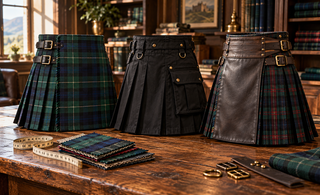
How much does a kilt cost? The honest answer is that the price depends on what you are buying: a simple everyday kilt, a traditional tartan kilt, a pocketed utility style, a leather or hybrid design, or a complete formal outfit. Fabric, the amount of material, pleat construction, custom sizing, hardware, and included accessories can all change the final figure.
This guide explains what you are paying for, where it makes sense to save, and which details are worth a larger budget. It also uses current Kilt Experts listings checked on October 22, 2026 as practical examples. Product prices and options can change, so always confirm the live product page before ordering.
How Much Does a Kilt Cost? The Quick Answer
Kilts cover a wide price spectrum because the word kilt describes several different garments. A lightweight, machine-made casual style does not require the same material or labour as a heavily pleated, made-to-measure traditional kilt. A complete wedding package costs more than a standalone garment because it may also include a jacket, waistcoat, shirt, sporran, belt, socks, flashes, and shoes.
Instead of shopping by price alone, start with three questions:
- Where will you wear it? A festival, workday, wedding, Highland games event, and black-tie celebration have different needs.
- How often will you wear it? Occasional use may justify a simpler construction, while regular use rewards stronger fabric, reliable stitching, and better adjustment.
- Do you need only the kilt or a complete outfit? Accessories can materially change the total budget.
For a broad view of available styles, begin with the Kilt Experts kilt collection. It lets you compare traditional, modern, utility, hybrid, leather, and other designs before narrowing the choice.
Kilt Cost by Type
The easiest way to understand kilt pricing is to compare categories. Each type uses different materials and construction methods and serves a different purpose.
| Kilt type | Best for | Main price drivers |
|---|---|---|
| Traditional tartan kilt | Heritage wear, weddings, formal events | Fabric weight, yardage, pleating, tartan choice, custom fit |
| Modern tartan kilt | Casual events and contemporary styling | Acrylic or wool-blend fabric, pockets, straps, hardware |
| Utility kilt | Work, festivals, everyday wear | Cotton weight, cargo pockets, reinforcements, snaps and buckles |
| Leather or hybrid kilt | Statement outfits, alternative fashion, events | Leather grade, panel construction, tartan inserts, hardware |
| Complete kilt outfit | Weddings and formal occasions | Number of pieces, jacket style, footwear and accessory quality |
Traditional tartan kilts
A traditional tartan kilt usually puts more of the budget into fabric, pleats, and fit. The familiar swing and structured drape come from the material used across the garment and the way it is pleated at the back. Five-yard and eight-yard descriptions generally refer to the amount or traditional style of cloth used; an eight-yard construction typically creates greater depth and movement, but the exact build varies by maker and fabric width.
Within the men’s tartan kilt collection, compare fabric descriptions, available drop lengths, closure systems, and whether the design is purely traditional or combines tartan with modern features. As one current reference point, the active Buchanan Hunting Tartan 16oz Stud Kilt was listed from $68.97 when this guide was checked. Its price reflects a modern stud-kilt construction rather than a hand-sewn bespoke wool kilt, so it should not be treated as a universal benchmark for every tartan garment.
Utility kilts
A utility kilt trades some traditional formality for practical features such as cargo pockets, adjustable straps, reinforced stitching, and sturdy cotton fabric. Price usually rises with fabric weight, pocket complexity, detachable components, high-quality fasteners, and the amount of reinforcement at stress points.
Browse the utility kilts for men if storage and everyday durability matter more than strict Highland dress convention. A lower price is not automatically a bargain if the pockets sag, snaps pull through the fabric, or pleats lose their shape after a few wears. Look closely at seam construction and how the hardware is attached.
Modern and hybrid kilts
Modern kilts can use tartan, solid cotton, denim, leather, or a combination of materials. Hybrid designs often mix a tartan pleated back with a contemporary front apron, detachable pockets, decorative chains, or contrast straps. More panels and hardware mean more cutting, assembly, and finishing, which can increase cost even when the fabric itself is affordable.
The modern kilts for men collection is useful for comparing these design choices. If you want a current product example with traditional pattern and contemporary hardware, the active Anderson Tartan 16oz Stud Kilt with Detachable Chain and Pockets was listed at $69.97 on October 22, 2026.
Leather kilts
Leather kilts generally cost more than basic cotton styles because leather is expensive to source, heavier to handle, and less forgiving to cut and stitch. Full-grain, top-grain, split, bonded, and synthetic materials do not offer the same durability or feel, so confirm exactly what a product description means by “leather.”
Construction also matters. A well-designed leather kilt must distribute weight, avoid bulky seams, and use hardware strong enough for the material. Explore leather kilts for men to compare all-leather and hybrid designs rather than assuming they belong in one price tier.
Complete kilt outfits
A complete package can offer better value than buying every component separately, but only if the included pieces match the occasion and fit correctly. A formal outfit may include the kilt, jacket and waistcoat, shirt, bow tie or neckwear, sporran, belt and buckle, kilt hose, flashes, and shoes. Packages differ, so compare the exact contents rather than the headline price.
See the complete kilt outfit deals for live package configurations. If you already own shoes or accessories, buying a smaller set may be better value than paying for duplicates.
What Makes One Kilt Cost More Than Another?
1. Fabric type and weight
Fabric is one of the largest cost variables. Traditional wool has a different drape, feel, weather performance, and production cost from acrylic wool, cotton, denim, or synthetic blends. Within one material family, heavier cloth usually costs more and can require stronger construction.
Do not judge fabric only by weight. A heavy material can still be poorly woven, and a lighter cloth can be appropriate for warm weather or casual use. Choose the material for the climate and purpose, then assess its finish, recovery, colourfastness, and care requirements.
2. Five-yard versus eight-yard construction
More cloth generally allows deeper or more numerous pleats, which can improve swing and visual richness. It also increases material use and sewing time. However, yardage alone does not guarantee quality. Pleat consistency, pattern alignment, waistband structure, and finishing matter just as much.
If you want a formal traditional silhouette, the extra material may be worthwhile. If you need a lighter kilt for travel or occasional warm-weather wear, a less fabric-intensive build may be more comfortable and economical.
3. Pleating method and tartan alignment
Pleats can be arranged to repeat the tartan sett or emphasize a particular stripe. Accurate alignment takes planning and consumes fabric. Hand finishing, careful pressing, and stable stitching add labour. On inexpensive garments, mismatched lines at seams or inconsistent pleat widths are common shortcuts.
4. Ready-made, made-to-measure, or bespoke
A ready-made kilt uses standard sizes and is usually the most affordable route. Made-to-measure adapts a base pattern to your measurements and commonly costs more because the garment is cut for you. Fully bespoke work may involve individual pattern drafting, extensive handwork, specialist cloth, and fittings, putting it in a different price category.
Custom sizing is valuable only when the measurements are correct. Before ordering, use this step-by-step guide to measuring for a kilt. A cheaper kilt that needs major alteration can cost more in the end than one ordered correctly.
5. Hardware and functional details
Buckles, leather straps, snaps, D-rings, chains, studs, and pocket fasteners can be decorative or functional. Strong metal hardware and reinforced mounting points cost more than lightweight fittings, but they also matter to long-term wear. For utility kilts, inspect pocket attachment, stress-point bar tacks, and whether detachable parts can be replaced.
6. Tartan availability and customization
Common tartans are often easier to source than rare, restricted, or specially woven patterns. Custom tartan weaving can require minimum fabric quantities and longer production times. Even within common tartans, colourway and fabric mill can affect price.
If clan connection matters, confirm the exact tartan name and colourway before ordering. If your priority is simply a pattern you enjoy, an open or universal tartan can offer more flexibility.
7. Craftsmanship and quality control
Good construction is visible in straight waistbands, secure closures, clean hems, even pleats, reinforced stress points, and controlled pattern matching. Quality control also includes accurate sizing and clear product information. These details add labour but reduce the risk of a garment that twists, gaps, or loses shape.
How to Budget for a Complete Kilt Outfit
The kilt is the centre of the outfit, but it is rarely the only purchase. Your final budget depends on the level of formality and what you already own.
Essential components
- Kilt: Choose the garment first because its tartan, colour, and formality guide everything else.
- Shirt: A simple dress shirt may work for formal styling, while a Jacobite-style shirt suits relaxed or themed looks.
- Sporran: Since a traditional kilt has no trouser pockets, a sporran provides storage and visual balance. Read the sporran types and fit guide before choosing day, semi-dress, or full-dress styling.
- Hose and flashes: These frame the lower leg and help complete the outfit. The kilt socks and flashes guide explains correct height and coordination.
- Footwear: Ghillie brogues are traditional, but polished dress shoes or boots can work depending on the occasion.
Optional or occasion-specific pieces
- Jacket and waistcoat for weddings, evening events, or formal ceremonies
- Belt and buckle when not wearing a waistcoat, depending on the outfit
- Kilt pin for weight and decoration on the front apron
- Fly plaid and brooch for selected ceremonial or formal looks
- Sgian dubh or a safe decorative alternative, subject to local law and venue rules
Before adding everything to the cart, decide on an outfit level: casual, smart daywear, wedding guest, groom, or full formal. This prevents overspending on accessories that do not belong together. The broader guide to what to wear with a kilt can help build a coherent list.
How to Tell Whether a Kilt Is Good Value
Price and value are not the same thing. A low-cost kilt can be excellent value for occasional casual wear, while an expensive garment is poor value if the fit or construction is wrong. Use this checklist before buying:
- Clear material description: The listing should distinguish wool, acrylic wool, cotton, denim, genuine leather, and synthetic alternatives.
- Useful measurements: Waist, hip or seat, drop length, and adjustment range should be explained.
- Consistent pleats: Look for even width, clean pressing, and secure stitching.
- Pattern alignment: Tartan lines should appear intentional at aprons, seams, and pleats.
- Reinforced stress points: Pay special attention to straps, buckles, snaps, pockets, and waistband joins.
- Appropriate hardware: Fasteners should match the garment’s weight and intended use.
- Realistic care instructions: Wool, leather, and cotton require different maintenance.
- Transparent customization: Know which choices are included and which add to the price.
- Suitable return or alteration terms: Custom garments may have different policies from standard-size stock.
Where to Save—and Where to Spend More
Spend more on fit
Fit has the greatest effect on comfort and appearance. A kilt should sit at the intended waist, fasten securely without strain, and fall to the correct point around the knee. Budget for careful measurement and, when necessary, professional alteration.
Spend more on the feature you use most
For formal wear, invest in fabric, pleat structure, and a jacket that fits well. For work or festivals, prioritize durable cotton, reliable pockets, and reinforced hardware. For a statement leather design, focus on material quality and comfortable panel construction.
Save on rarely used accessories
You do not need every Highland accessory for every event. A well-fitted kilt, appropriate shirt, suitable footwear, hose, and the right sporran can create a complete look without adding ceremonial pieces you will rarely wear.
Consider cost per wear
A kilt worn twenty times at $100 costs $5 per wear before care expenses. A $60 kilt worn twice costs $30 per wear. The simple calculation is:
Cost per wear = purchase price ÷ number of wears
This is not a quality score, but it is a useful way to decide whether a higher initial budget makes sense. Frequent wear also makes repairability, spare hardware, and timeless styling more important.
Should You Buy a Kilt or Rent One?
Renting can make sense for a one-time formal event, especially when a complete coordinated outfit is required. Buying makes more sense when you expect repeated weddings, Burns Night dinners, Highland games, performances, heritage events, or everyday wear.
When comparing the two, include more than the base price. Rental collection and return deadlines, damage deposits, limited tartan choices, and standard sizing can affect convenience. Ownership brings care and storage responsibilities, but it also allows a more personal tartan and consistent fit.
How to Make a Kilt Last Longer
Longevity improves value. Hang the kilt on a strong clip hanger, let it air after wear, and avoid crushing the pleats in a packed wardrobe. Brush away surface dirt rather than over-cleaning. Follow the care label: wool may require specialist cleaning, cotton often has different washing instructions, and leather needs products designed for leather.
Store the garment completely dry. Check straps, buckles, snaps, and loose threads before they become larger repairs. When travelling, fold along the pleats and unpack promptly. Good care protects both the shape and the colour.
Frequently Asked Questions About Kilt Prices
Why are some kilts so cheap?
Lower-priced kilts may use less fabric, acrylic rather than wool, standardized sizing, machine construction, simpler pleats, or inexpensive hardware. That does not automatically make them unsuitable. The key is whether the materials and build match how often and where you plan to wear the garment.
Why can a traditional kilt cost much more?
Traditional kilts can require several yards of quality tartan, careful pleating, pattern alignment, structured internal finishing, custom measurements, and many hours of skilled labour. Rare cloth and hand finishing add further cost.
Is an eight-yard kilt always better than a five-yard kilt?
No. An eight-yard kilt usually has deeper pleats and a fuller swing, but comfort, climate, body shape, fabric quality, and intended use matter. A well-made five-yard kilt can be the better choice for lighter wear or a smaller budget.
How much should I budget for accessories?
Build the list around the occasion. Start with the sporran, hose, flashes, shirt, and footwear, then add a jacket, belt, pin, or fly plaid only if the dress level calls for them. Compare a package against the cost of the pieces you actually need.
Are custom kilts worth the extra cost?
Custom sizing is often worth it for frequent wear, unusual proportions, or an important formal event. It is less valuable if measurements are inaccurate or if the garment will be worn only once. Check the maker’s measurement, alteration, and return terms before ordering.
Does a higher price guarantee better quality?
No. Price can reflect material, labour, brand, customization, or simply complexity. Use the quality checklist above and judge the garment against its intended purpose.
What is the best first kilt to buy?
For heritage and formal versatility, choose a tartan you genuinely like in a dependable construction. For casual wear, festivals, or practical storage, a cotton utility kilt may offer better value. If you need an entire wedding look, compare complete outfits before buying individual accessories.
Final Buying Advice
The best kilt is not necessarily the cheapest or most expensive. It is the one that fits correctly, suits the occasion, uses materials appropriate for your climate and wearing habits, and includes the features you will actually use.
Set a total outfit budget, not just a kilt budget. Compare fabric, yardage, pleats, hardware, customization, and included pieces. Verify measurements before ordering, and check the live price because options can change the total. With that approach, you can spend confidently and choose a kilt that delivers real value every time you wear it.