
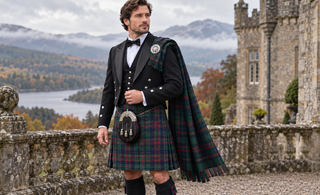
A fly plaid is one of the most dramatic finishing pieces in formal Highland dress. When it is folded cleanly, pinned securely and allowed to fall naturally behind the left shoulder, it adds movement, colour and ceremony without hiding the kilt. When it is placed on the wrong shoulder, pinned too close to the neck or allowed to drag below the outfit, it can feel more like a costume than a considered part of Highland wear.
The quick answer: wear a fly plaid over your left shoulder, secure its folded corner to the jacket around upper-chest or shoulder level with a plaid brooch, and let the main body of the fabric flow down your back. The plaid normally matches the tartan of the kilt and should finish around, or slightly below, the kilt hem rather than touching the ground.
This complete guide explains what a fly plaid is, how to fold and pin it, which shoulder to use, how long it should hang, when to wear it and how to coordinate the tartan, brooch, jacket and other kilt accessories.
What Is a Fly Plaid?
A fly plaid is a square piece of tartan cloth worn over one shoulder as part of formal or ceremonial Highland dress. It is usually made in the same tartan as the wearer’s kilt, creating a continuous visual link between the front of the outfit and the fabric flowing down the back.
Unlike a Great Kilt, the fly plaid is not wrapped around the body to form the kilt itself. It is a separate accessory added after the kilt, shirt, waistcoat and jacket are in place. A decorative plaid brooch secures it to the upper part of the jacket.
For a ready-to-ship option, see the active USA-stock 48 x 48-inch tartan fly plaid. Its 16oz fabric and broad tartan selection make it suitable for coordinating with many traditional kilt outfits.
Which Shoulder Does a Fly Plaid Go Over?
A fly plaid is traditionally worn over the left shoulder. The folded corner is placed at the left upper chest or shoulder, while the rest of the cloth falls behind the wearer.
The left-side position keeps the centre of the jacket visible and helps the plaid frame rather than cover the outfit. It also leaves the sporran, waistcoat and jacket front as separate focal points. If you are dressing in front of a mirror, remember that the reflection reverses the image: check the actual shoulder with your hand before pinning.
What Do You Need to Wear a Fly Plaid?
Before starting, assemble the complete outfit rather than treating the fly plaid as an isolated accessory. You will normally need:
- A tartan kilt that fits correctly at the natural waist
- A matching or intentionally coordinated fly plaid
- A Prince Charlie, Argyll or other suitable Highland jacket
- A secure plaid brooch with a functioning pin and clasp
- A waistcoat when appropriate to the dress code
- Kilt hose, flashes, shoes and the correct sporran for the occasion
If you are building the outfit from the foundation upward, browse men’s tartan kilts and the Kilt Experts jacket collection before choosing the plaid.
How to Wear a Fly Plaid: Step by Step
Step 1: Put on the main outfit first
Dress completely before adding the plaid. Fasten the kilt, shirt, waistcoat and jacket; then position the belt and sporran if they are part of the chosen outfit. Smooth the jacket at the shoulders and lapels. The plaid should be the final major layer because it needs to sit over the finished tailoring.
Step 2: Confirm that the tartan matches
Lay the fly plaid beside the kilt in good light. The sett—the repeating arrangement of lines and colours—should normally be the same. A close but incorrect tartan becomes very obvious when the two fabrics are worn together. Also compare fabric weight and colour depth, as a very light plaid can move differently beside a substantial formal kilt.
Step 3: Find the corner you will place on the shoulder
Spread the plaid flat and choose one corner as the top. Check the direction of the sett and fringed edges. There is no need to turn the whole plaid into a narrow sash; only the section resting on the shoulder needs to be controlled.
Step 4: Fold or gather the shoulder section neatly
Create several broad accordion-style folds near the selected corner. Keep the folds even and wide enough for the brooch pin to hold securely. The aim is a compact shoulder section with the main body left open to drape down the back.
Do not make the folded section so thick that the brooch cannot close safely. If the fabric is heavy, use fewer, broader folds instead of compressing a large bundle into a small pin.
Step 5: Place the folded section on the left shoulder
Stand upright and position the folded corner across the left shoulder. The top should feel balanced, not pulled tightly toward the neck or allowed to slip toward the arm. Let the rest of the fabric fall behind you before deciding where to pin it.
Step 6: Set the hanging length
Ask another person to view the back. Adjust the amount of fabric over the shoulder until the lower edge finishes around the kilt hem or slightly below it. The plaid should not drag near the ankles, and it should not be so short that it looks like a small scarf.
Step 7: Pin the plaid at breast or shoulder level
Open the plaid brooch and pass the pin through the folded plaid and an appropriate layer of the jacket at the upper left chest or shoulder. Keep the sharp point away from the wearer’s skin and make sure the clasp closes completely. The brooch should support the weight of the cloth without pulling the jacket lapel out of shape.
Because jacket fabrics and brooch mechanisms vary, work slowly and avoid forcing a thick pin through delicate material. If the plaid is unusually heavy, a discreet supporting safety pin placed from the inside by an experienced dresser can take some strain off the decorative brooch.
Step 8: Arrange the drape behind you
Spread the plaid gently across the upper back so it falls in soft vertical folds. It should remain behind the arm rather than crossing diagonally over the front like a sash. Check that the fringed edge is free and that the plaid does not cover the sporran or twist around the waist.
Step 9: Test movement and security
Raise and lower the left arm, turn the torso, sit down and walk several steps. The brooch should remain closed, the jacket should not pull sharply and the plaid should return to a natural position. Re-pin before leaving home if the shoulder feels unbalanced.
Where Should the Plaid Brooch Sit?
The brooch usually sits on the upper left chest or near the shoulder joint, high enough to support the plaid but not so high that it presses into the neck. A useful visual position is between the outside edge of the jacket lapel and the top of the shoulder.
A brooch placed too low allows the plaid to pull forward and can hide the jacket. A brooch placed directly on the top of the shoulder may be uncomfortable beneath a coat or when sitting against a chair. Use the wearer’s build, jacket cut and brooch size to find a secure middle position.
How Long Should a Fly Plaid Hang?
The main body should generally finish around the bottom of the kilt or just below it. This creates a balanced vertical line without overwhelming the outfit. The correct result can vary slightly with the wearer’s height, the plaid’s dimensions and the amount of fabric folded over the shoulder.
If the plaid hangs too low, bring more material over the shoulder before pinning. If it appears too short, reduce the depth or number of shoulder folds. Do not trim the fabric simply to correct temporary styling; adjust the drape first.
Should the Fly Plaid Match the Kilt?
For the most traditional and visually coherent result, the fly plaid should match the kilt tartan. Matching the sett matters more than choosing a vaguely similar colour palette. Black Watch, Royal Stewart and clan tartans each have distinct proportions and line arrangements that should continue consistently across the outfit.
A deliberately contrasting plaid can be used in theatrical, fashion or personal styling, but it reads as a modern choice rather than a standard formal combination. For weddings, clan events and formal photographs, matching tartans are the safest option.
What Fabric Weight Works Best?
A fly plaid works best when its weight and texture feel compatible with the kilt. Medium-to-heavy tartan has enough body to form clean folds and hang smoothly, while very light cloth may flutter, twist or look insubstantial beside formal tailoring.
Exact weight does not always need to be identical, but colour, sett scale and surface texture should look intentional together. If ordering the pieces separately, compare product descriptions and photographs or ask for confirmation before the outfit is needed.
When Should You Wear a Fly Plaid?
A fly plaid is an optional formal accessory rather than an everyday requirement. It is most appropriate when the event welcomes full Highland dress or when the wearer has a ceremonial or prominent role.
Weddings
Grooms, best men and members of the wedding party often use fly plaids to create a formal, photogenic look. The flowing tartan is particularly effective in outdoor portraits and processional settings.
Formal dinners and balls
A matching fly plaid can complement a Prince Charlie outfit when the dress code is black tie or Highland dress. Keep the brooch polished and the drape controlled so the result remains elegant.
Clan gatherings and Scottish celebrations
The larger area of visible tartan makes the plaid a strong expression of clan or family identity. It also helps distinguish ceremonial dress from a simpler day outfit.
Parades and official appearances
When full dress is expected, a securely pinned fly plaid adds presence. Confirm any organisation-specific uniform rules before substituting personal styling choices.
When Is a Fly Plaid Too Formal?
A fly plaid can feel excessive for a casual pub gathering, everyday utility-kilt outfit, informal outdoor festival or event where guests are asked to dress simply. In these settings, a well-fitted kilt, shirt, belt and day sporran may be more natural.
The wearer’s role matters too. A wedding guest should avoid an outfit so elaborate that it competes with the groom or official wedding party. If the invitation does not specify Highland dress, ask the host or choose a restrained combination.
Can You Wear a Fly Plaid With a Prince Charlie Jacket?
Yes. The Prince Charlie jacket is one of the classic formal choices for a fly plaid, especially for evening events and weddings. Wear the matching plaid over the left shoulder and keep the jacket front, waistcoat and bow tie neatly visible.
The ornate buttons, brooch, sporran cantle and other metal pieces should share a compatible finish. They do not need to be identical, but too many competing motifs can make the outfit busy.
Can You Wear a Fly Plaid With an Argyll or Tweed Jacket?
An Argyll jacket can support a fly plaid for many formal and semi-formal occasions, depending on the cloth and accessories. Tweed creates a softer daywear character; a plaid can work for ceremonial outdoor events, but it should be styled with restraint so the shoulder does not become bulky.
Whichever jacket you choose, confirm that the shoulder construction can safely take the brooch and fabric weight. Explore Argyll, Prince Charlie and other kilt jackets when planning the complete look.
How to Coordinate the Brooch and Accessories
The plaid brooch is prominent, so treat it as part of the outfit’s metalwork. A silver-tone Celtic brooch pairs naturally with silver-tone jacket buttons, a sporran cantle and a kilt pin. Antique or pewter finishes suit tweed and softer daywear palettes.
Avoid using the decorative kilt pin as the plaid fastener. The two accessories have different jobs: the kilt pin weights the outer apron, while the plaid brooch secures fabric at the shoulder. Our kilt pin placement guide explains why the pin should pass only through the outer apron rather than fastening the aprons together.
Balance the rest of the outfit with a suitable sporran, belt and hose. Helpful companion guides include how to choose a sporran, how to wear a kilt belt and how to wear kilt socks and flashes.
How to Keep a Fly Plaid Secure
- Use a brooch with a straight pin and reliable locking clasp.
- Pin through a manageable number of folds rather than a thick bundle.
- Position the brooch where the jacket can support the cloth.
- Keep most of the plaid behind the arm to reduce forward pull.
- Test sitting, walking and turning before the event.
- Recheck the clasp after putting on or removing an overcoat.
For vigorous ceilidh dancing, consider removing the plaid temporarily if it catches the arm, shifts repeatedly or risks striking another dancer. Store it folded safely and reattach it for formal photographs or presentations.
Common Fly Plaid Mistakes
Wearing it on the right shoulder
The standard position is the left shoulder. Check the actual side rather than relying on a mirrored photograph.
Turning it into a diagonal sash
The main fabric should flow behind the wearer. Pulling it across the torso hides the jacket and changes the silhouette.
Pinning too close to the neck
This creates pressure and can make the plaid bunch around the collar. Move the fastening outward toward the shoulder.
Using a non-matching tartan by accident
Similar colours do not guarantee the same sett. Compare the full repeating pattern before the event.
Letting the fabric hang too low
A plaid that approaches the ankles can catch on chairs or underfoot. Adjust the amount folded over the shoulder.
Overloading a small brooch
A tiny pin may not secure heavy tartan. Choose a functional plaid brooch, not merely a lightweight decorative badge.
Ignoring the jacket underneath
A heavy plaid can distort an ill-fitting shoulder. Make sure the jacket fits correctly and the pin does not damage delicate cloth.
Fly Plaid vs Tartan Sash
These two accessories are often confused, but they are not the same.
| Feature | Fly Plaid | Tartan Sash |
|---|---|---|
| Shape | Large square of tartan | Long, narrower strip or stole |
| Typical styling | Pinned over the left shoulder, flowing down the back | Draped according to dress, role and tradition |
| Common wearer | Often part of men’s formal Highland dress | Commonly styled with women’s Highland or formal wear |
| Visual effect | Full, ceremonial and dramatic | Lighter, more streamlined accent |
Modern styling is flexible, but it is helpful to understand the distinction before ordering. Choose the accessory designed for the outfit rather than trying to fold a sash into a full fly plaid.
How to Store and Care for a Fly Plaid
After wear, remove the brooch carefully and inspect the cloth for moisture or marks. Let the plaid air naturally before storage. Brush away loose dust with a clean garment brush and follow the fabric-specific care instructions before washing or dry cleaning.
Fold along broad lines rather than crushing the fabric into a small bag. Store it in a breathable garment box or cloth bag away from direct sunlight, damp and pests. Keep the brooch separately wrapped so its pin cannot snag the tartan.
Before the next event, unfold the plaid early and allow creases to relax. Use only a temperature and pressing method suitable for the stated fibre; excessive heat can damage synthetic fibres or create shine on wool blends.
Frequently Asked Questions
Does a fly plaid always go on the left shoulder?
Yes, the customary position for men’s formal Highland dress is over the left shoulder, secured near the upper chest or shoulder with a plaid brooch.
Should the fly plaid be the same tartan as the kilt?
Normally, yes. A matching sett creates the most traditional and coordinated formal outfit.
Can I wear a fly plaid without a jacket?
A fly plaid is most secure and visually appropriate with a structured Highland jacket or another garment designed to support the brooch. Casual shirt-only styling may not provide a safe or balanced fastening point.
Can I use a kilt pin instead of a plaid brooch?
It is better to use a proper plaid brooch with a fastening suitable for the shoulder folds. Keep the kilt pin on the lower outer apron for its intended decorative and weighting role.
Should the plaid hang in front or behind?
The main fabric should flow down the back, behind the left arm. Only the folded fastening section and brooch should be prominent at the front shoulder.
Can I dance while wearing a fly plaid?
You can, but check that the cloth and brooch remain secure. For energetic ceilidh dancing, removing it temporarily may be safer and more comfortable.
Is a fly plaid required with a kilt?
No. It is an optional formal accessory. Many complete and elegant kilt outfits are worn without one.
Final Fly Plaid Checklist
- The fly plaid and kilt tartan match.
- The main outfit is fully dressed before the plaid is added.
- The folded corner rests on the left shoulder.
- The brooch is secure at upper-chest or shoulder level.
- The cloth flows behind the arm rather than across the torso.
- The bottom finishes around or slightly below the kilt hem.
- The jacket remains smooth and the wearer can move comfortably.
- The metal finish coordinates with the sporran, buttons and kilt pin.
A fly plaid should look effortless even though its placement is precise. Match the tartan, keep the shoulder folds controlled, pin it securely on the left and let the fabric fall naturally behind you. The result is a dignified formal silhouette that highlights both the tartan and the tailoring. Explore more kilt accessories or view complete kilt outfit deals to finish the look.