
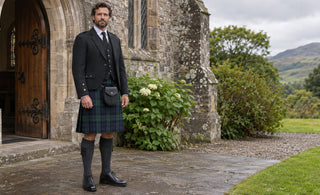
Yes, you can wear a kilt to a funeral. In Scotland and throughout the Scottish diaspora, Highland dress can be a dignified way to honour family, heritage or the life of the person who has died. The important question is not whether a kilt is automatically “allowed,” but whether the complete outfit matches the family’s wishes and the tone of the service.
A funeral kilt outfit should normally look restrained rather than celebratory: a well-fitted tartan kilt, a dark jacket, a plain shirt and tie, a simple leather sporran, subdued hose and polished black shoes. If the family has requested bright colours, a favourite tartan or informal clothing, follow that request instead of a generic rule.
Quick Answer: What Should You Wear With a Kilt to a Funeral?
- Kilt: your family or clan tartan, a tartan connected to the deceased, or a muted universal tartan.
- Jacket: black or charcoal Argyll, dark tweed, or another understated short kilt jacket.
- Shirt and tie: plain white or pale shirt with a black, charcoal, navy or subtly patterned tie.
- Sporran: a simple black or dark leather day sporran; avoid highly ornate or theatrical styles.
- Hose and flashes: charcoal, black, dark navy or another quiet neutral colour.
- Shoes: polished black dress shoes or neatly tied black ghillie brogues.
- Accessories: keep metalwork and ornamentation minimal.
Most importantly, ask the close family or funeral organiser if the invitation does not make the dress code clear. Family wishes always take priority over general Highland dress advice.
Is It Respectful to Wear a Kilt to a Funeral?
A kilt can be deeply respectful when it reflects a genuine personal, family, regimental or cultural connection. It may represent the wearer’s own Scottish heritage, the deceased’s background, a shared clan connection or a uniformed tradition. In that context, Highland dress is not a costume; it is formal clothing with meaning.
However, respect is communicated by the whole presentation. A kilt paired with a dark jacket, plain tie and restrained accessories fits a solemn service far better than an outfit built for a wedding, festival or parade. The aim is to honour the person being remembered, not to make the wearer the centre of attention.
If you are not Scottish, a kilt can still be appropriate if the family welcomes it or it has a meaningful connection to the deceased. Our separate guide explains the wider etiquette around wearing a kilt if you are not Scottish.
Family Wishes Come Before Tradition
Modern funerals vary widely. Some families ask everyone to wear black. Others request a favourite colour, football scarf, military uniform, tartan or relaxed clothing that reflects the deceased’s personality. Religious buildings, cemeteries, crematoria and military services may also have their own expectations.
Before choosing the outfit, check the funeral notice, invitation or message from the family. If no dress guidance appears, a short, discreet question to the organiser is appropriate. You can ask, “Would Highland dress be suitable for the service?” That gives the family an easy opportunity to approve it or suggest something different.
Do not pressure bereaved relatives into making a complex decision. If you cannot confirm the dress code, choose the quieter option: a subdued kilt outfit or a conventional dark suit.
Choosing the Right Tartan for a Funeral
There is no universal “funeral tartan,” and black is not the only acceptable colour. A dark or weathered sett may look naturally subdued, but the meaning of the tartan matters more than its brightness.
Your Own Clan or Family Tartan
Wearing your own family tartan is generally a safe and authentic choice, especially when Highland dress is normal in your family. It represents who you are without claiming a connection that is not yours.
The Deceased’s Tartan
A tartan associated with the deceased can be a meaningful tribute, but it is considerate to confirm with the close family before wearing it. This is particularly important when several relatives plan a coordinated tribute or when the tartan has military, organisational or ceremonial significance.
Universal and District Tartans
If you do not have a clan tartan, a universal, national or district tartan can work well. Dark green, blue, charcoal and weathered colourways tend to blend easily with black funeral accessories. Black Watch is a familiar example of a dark tartan, but it is not a compulsory “mourning tartan.”
Browse the range of men’s tartan kilts, and use our complete tartan selection guide if you need help understanding clan, universal and colour-based choices. US customers who need a ready-stock traditional option can also check current sizing for the US-stock Black Watch 8-yard kilt.
Do You Have to Wear a Dark Tartan?
No. A brighter clan tartan can still be respectful when it carries a genuine family connection or has been requested by the organisers. Tone it down with a dark jacket, plain tie, simple sporran and neutral hose. If the family asks for colourful clothing, the brighter tartan may be exactly right.
Best Jacket to Wear With a Kilt at a Funeral
The jacket establishes the formality of the outfit. It should be cut for Highland dress, because an ordinary suit jacket is usually longer and can cover too much of the kilt.
Dark Argyll Jacket
A black or charcoal Argyll jacket is one of the most versatile choices. Its clean shape works for daytime services, church funerals, crematoria and formal gatherings afterward. Pair it with a waistcoat if you want a complete formal silhouette, or wear it without one for a slightly simpler look.
Dark Tweed Jacket
Charcoal, dark brown, navy or Lovat-toned tweed can suit a country funeral, an outdoor burial or a service where the dress code is formal but not black tie. Choose a plain or subtle weave rather than a bold check.
Prince Charlie Jacket
A Prince Charlie jacket is designed for formal evening Highland dress and is commonly associated with weddings, dinners and celebrations. It is not automatically disrespectful, but its silver buttons and dressy cut can appear more ornate than necessary at many funerals. If you already own one and the service is highly formal, keep every other element quiet. When choosing from scratch, a dark Argyll is usually the more adaptable funeral option.
Compare both styles in our guide to Argyll and Prince Charlie jackets, or browse the live kilt jacket collection.
Shirt, Tie and Waistcoat
A crisp white shirt is the safest choice. Pale grey, cream or another very quiet solid colour may also work if it coordinates with the family’s request. Avoid bright checks, novelty prints, open-neck festival styling and shirts with prominent logos.
Choose a plain black, charcoal or navy tie, or a very subtle woven pattern. A restrained tartan tie can work when it has clear meaning, but it should not compete with the kilt. Bow ties usually suggest evening dress or celebration and are less common for a daytime funeral unless the family has chosen formal black tie.
If wearing a waistcoat, keep it dark and ensure that it fits comfortably when seated. A belt is usually unnecessary with a waistcoat because the two can crowd the waistline. Without a waistcoat, a simple black kilt belt may be worn if the outfit and jacket allow it.
Which Sporran Is Appropriate?
The sporran should be practical and understated. A plain black leather day sporran or a quiet semi-dress design is normally more suitable than a large horsehair, heavily furred or highly polished ceremonial sporran. Simple does not mean careless: the leather should be clean, the closure secure and the chain adjusted so the sporran sits neatly at the front.
Do not overfill it. A bulky phone, keys and wallet can make the sporran swing or distort the apron during the service. Carry only essentials and silence electronic devices before entering.
You can compare options in the sporran collection and read the sporran types and fit guide. For a restrained full-black option, the Thistle crest leather sporran includes a full-black colour choice when available.
Kilt Hose, Flashes and Footwear
Charcoal, black, dark navy and dark green hose fit the quiet tone of most funerals. Cream hose can also be traditional, but darker shades normally look more restrained. Keep flashes black, charcoal or closely matched to the tartan; avoid very bright contrast unless the family has requested colour.
Shoes should be polished, comfortable and suitable for the location. Black ghillie brogues work with Highland dress, while plain black dress shoes are equally appropriate and sometimes easier for long periods of standing. For graveside services, choose soles that grip wet grass or uneven ground.
Browse kilt shoes and ghillie brogues, then follow our ghillie brogue lacing guide. The laces should sit securely around the lower ankle rather than being wrapped high up the calf.
What About Kilt Pins, Plaids and Other Accessories?
Keep metal accessories limited. A simple kilt pin, plain cufflinks and an understated watch are enough for most outfits. The kilt pin belongs on the lower outer apron only; it should never fasten both apron layers together.
A fly plaid and large shoulder brooch create a ceremonial appearance and may be excessive unless you are part of an organised honour guard, pipe band, military group or family tribute. The same principle applies to decorative chains and large crests: wear them only when they carry a clear role or meaning.
If you wear a Glengarry, Balmoral or other Highland bonnet, remove it indoors when the venue or religious custom expects men to uncover their heads. Military and uniformed participants should follow their organisation’s instructions.
Should You Wear a Sgian-Dubh?
A sgian-dubh may be part of traditional Highland dress, but it is a bladed object. Laws, venue rules and security procedures differ by country and location. Never assume it will be permitted in a church, crematorium, cemetery, government building or venue with security screening. The simplest option is to leave it at home or wear a clearly non-bladed imitation only if local rules allow. When uncertain, ask the venue in advance.
How Formal Should the Outfit Be?
Match the formality of the service rather than trying to create the most elaborate outfit possible.
- Traditional church funeral: tartan kilt, dark Argyll jacket and waistcoat, white shirt, dark tie, leather sporran, dark hose and black shoes.
- Crematorium service: the same combination works well; simplify accessories and choose comfortable layers for indoor seating.
- Graveside or rural service: dark tweed, weather-appropriate outerwear and shoes with stable soles are practical.
- Military or regimental funeral: follow the official uniform and insignia instructions precisely.
- Celebration of life: the family may invite brighter colours, a favourite tartan or less formal clothing. Follow their request.
- Online memorial: dress the visible upper half with the same care you would show in person, and choose a quiet background.
Funeral Kilt Outfit for Cold or Wet Weather
Scottish weather can be cold, wet and windy, and graveside services often involve standing outdoors. Add a dark overcoat or discreet waterproof layer that is long enough to protect you but not so bulky that it crushes the kilt. Carry a plain dark umbrella and consider gloves in black, charcoal or brown leather.
After rain, hang the kilt in a ventilated space and allow it to dry naturally before storage. Do not place wet wool or acrylic wool directly against strong heat. Smooth the pleats while the garment hangs so they retain their shape.
Warm-Weather Funeral Kilt Outfit
In warm weather, choose a breathable shirt and a kilt weight appropriate to the climate. Keep the jacket on for the formal portions of the service unless the family, officiant or venue makes it clear that removing it is acceptable. A spare handkerchief is useful, and a lightly packed sporran prevents unnecessary weight.
Fabric weight affects comfort. Our comparison of 13oz and 16oz tartan kilts explains how weight changes drape, warmth and all-day wear.
How to Sit and Move Respectfully During the Service
Before sitting, move the sporran slightly aside and smooth the rear pleats downward so they do not bunch under you. Keep your knees comfortably close, place your phone on silent and avoid repeatedly adjusting the outfit. When standing, allow the sporran to return to the centre and brush the pleats into place discreetly.
At a graveside, walk carefully on uneven ground and avoid stepping too close to the edge of a grave. Follow ushers, clergy and funeral staff. Our detailed guide to sitting and walking in a kilt covers pleat care, stairs, cars and windy conditions.
Common Funeral Kilt Mistakes
- Ignoring the family’s request: a specific colour or dress theme always overrides a general rule.
- Choosing celebration-level ornament: excessive silver, fur, feathers or ceremonial accessories can draw attention.
- Wearing an unfamiliar tartan as a claim: choose a tartan you can explain honestly, or select a universal design.
- Arriving in an ill-fitting kilt: twisting aprons and an incorrect length make the outfit look careless.
- Using casual festival footwear: muddy boots, trainers or novelty shoes rarely suit a formal service.
- Forgetting weather and terrain: slippery soles and insufficient layers create avoidable discomfort.
- Bringing a blade without checking: venue security and local law must be respected.
- Overpacking the sporran: keep it quiet, light and secure.
- Treating the kilt as a conversation piece: answer questions politely, but keep the focus on the person being remembered.
A Simple Funeral Kilt Checklist
Prepare the outfit the day before so you are not making hurried decisions on the morning of the service.
- Confirm the family’s dress request and the venue’s rules.
- Check that the kilt is clean, correctly fitted and falls around mid-knee.
- Press or smooth the pleats according to the garment’s care instructions.
- Choose a dark kilt jacket, plain shirt and quiet tie.
- Use a simple leather sporran with only essential items.
- Select subdued hose, flashes and polished black shoes.
- Remove unnecessary ceremonial accessories.
- Check the forecast and prepare a dark coat or umbrella.
- Plan to arrive early enough to enter calmly and follow the ushers.
For general outfit coordination beyond funerals, see our complete guide to what to wear with a kilt.
Frequently Asked Questions
Can a non-Scottish person wear a kilt to a Scottish funeral?
Yes, when the family welcomes Highland dress or the kilt has a genuine connection to the deceased. Avoid presenting the outfit as a costume, and ask the organiser if you are uncertain.
Do you have to wear Black Watch tartan to a funeral?
No. Black Watch is dark and easy to style, but there is no rule that makes it the official funeral tartan. Your own family tartan, the deceased’s tartan with permission, or a universal tartan may be equally appropriate.
Can you wear a bright tartan to a funeral?
Yes, especially when it represents the family or has been requested. Balance it with a dark jacket, plain tie and restrained accessories. If the family asks everyone to wear bright colours, follow that instruction.
Is a Prince Charlie jacket appropriate for a funeral?
It can be worn at a highly formal service, but its evening-dress styling may look more celebratory than necessary. A black or charcoal Argyll jacket is usually the safer and more versatile choice.
Should the sporran be worn at a funeral?
Yes. Choose a simple black or dark leather day sporran and avoid heavily ornate styles. Carry only essentials so it hangs neatly and quietly.
Can you wear a fly plaid to a funeral?
Usually it is better to omit it unless you are part of a coordinated family, regimental, band or ceremonial tribute. A fly plaid adds visual formality and may draw more attention than a normal guest requires.
What colour hose should you wear?
Charcoal, black, navy or another subdued colour is a dependable choice. Cream can also be traditional, but bright contrast is best reserved for a specific family request.
Can women wear tartan to a funeral?
Yes. A tartan skirt, kilted skirt, sash, shawl or other modest tartan element can honour family heritage. The same principles apply: follow the family’s wishes, keep the styling respectful and dress for the venue and weather.
What if I only own a colourful wedding kilt outfit?
You can simplify it by removing ornate accessories, using a plain leather sporran, adding a dark jacket and tie, and choosing neutral hose. If it still feels too celebratory, a dark suit is a respectful alternative.
Final Advice
A kilt can be entirely appropriate at a funeral and may be one of the most meaningful garments you can wear. The best outfit is not the darkest or most expensive one; it is the one that respects the family, suits the venue and expresses heritage without demanding attention.
Confirm the dress code, choose a tartan with an honest connection, keep the jacket and accessories subdued, and prepare for the weather. With those decisions made, you can stop worrying about the clothing and give your full attention to supporting the family and remembering the person who has died.