
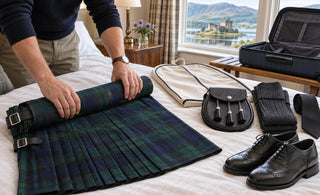
A kilt can travel well if you protect its pleats from sharp folds, heavy pressure and trapped moisture. The safest option is to carry it hanging in a breathable garment bag. When hanging is not practical, a gentle roll is usually better than folding the kilt across the pleats and pushing it into the bottom of a suitcase.
This guide explains how to pack a kilt for travel, step by step. It covers rolling a traditional tartan kilt, organising a complete Highland outfit, flying with a kilt, removing light travel creases and storing the garment correctly after the trip.
Quick Answer: What Is the Best Way to Pack a Kilt?
- Make sure the kilt is completely clean and dry.
- Remove the kilt pin and empty every pocket.
- Lay the kilt fully open on a clean, flat surface with the outer tartan side facing down.
- Align every pleat so none is twisted or folded backward.
- Arrange the aprons neatly and tuck the straps where they cannot crease the fabric.
- Roll the kilt gently and evenly from one side, smoothing the pleats as you go.
- Place the roll in a breathable cloth cover or purpose-made kilt roll.
- Pack it near the top of the suitcase without heavy items on it.
- Unroll and hang the kilt as soon as you arrive.
The roll should be firm enough to stay together but never tight enough to crush the pleats. For longer travel or formal events, carry the kilt in cabin baggage when the airline’s size rules allow it.
Why Rolling Usually Beats Folding
A traditional kilt contains carefully set pleats that run vertically from the waistband to the hem. A hard horizontal fold cuts across those pleats and can leave a visible line. Repeated pressure can also flatten the pleat edges, especially when a folded kilt sits beneath shoes or a full toiletry bag.
Rolling spreads the curve gradually instead of concentrating it at one fold. The method is particularly useful for an eight-yard kilt, which contains more fabric and deeper pleats. A lighter five-yard kilt occupies less luggage space, but its pleats still deserve the same care.
If you are choosing a kilt with regular travel in mind, compare the construction in our 5-yard vs 8-yard kilt guide. Fabric weight also changes luggage weight and bulk; our 13oz vs 16oz tartan comparison explains the difference.
What You Need Before Packing
You do not need expensive equipment. A few clean, soft materials are enough:
- A large, clean bed, table or floor area covered with a cotton sheet
- A breathable cloth garment bag, cotton pillowcase or purpose-made kilt roll
- Acid-free tissue paper or a clean white cotton cloth for long journeys
- Soft cotton ties or reusable fabric straps
- Small accessory pouches for the kilt pin, cufflinks and brooches
- Shoe bags for brogues
- A compact clothes brush
- A travel steamer only if the garment care instructions permit steaming
Avoid vacuum bags for a structured tartan kilt. They save space by applying exactly the kind of compression that can flatten pleats and set unwanted creases. Thin plastic bags are useful only as short-term protection from a leaking suitcase item; they are not suitable for long-term storage because they can trap moisture.
Prepare the Kilt Before You Roll It
1. Check That It Is Dry
Never pack a damp kilt. Moisture held inside a tight roll can cause musty odours, water marks and fabric distortion. If the kilt was recently worn outdoors, hang it in a ventilated room away from strong direct heat until it is fully dry.
2. Brush Away Surface Dust
Use a clean clothes brush and follow the direction of the fabric. Pay attention to the hem and the lower pleats. Do not rub a stain aggressively just before departure; follow the care label or ask a specialist cleaner for advice.
3. Empty and Detach
Remove coins, keys, paper, tickets and every other item from pockets. Detach a removable kilt pin so it cannot snag the tartan or become lost. A pin should be carried in a small pouch, not left pressed against the fabric.
Pack the sporran separately. Its leather, metal cantle or decorative fittings can leave pressure marks on the kilt. The same applies to belt buckles, plaid brooches and any accessory with a sharp edge.
4. Inspect the Pleats
Lay the kilt flat and look along the pleat edges from waistband to hem. Each pleat should lie in its intended direction. Correct any small twist with your hands before rolling; do not force a deeply creased pleat into shape while rushing to catch a flight.
If you want to understand the structure before handling it, see our guide to knife, box and Kingussie kilt pleats.
How to Roll a Kilt for Travel: Step by Step
Step 1: Open the Kilt Completely
Place the kilt on a clean, flat surface with the outer tartan side facing down and the inside facing you. Extend the aprons and pleated section so the garment lies in one long, flat shape. Keep the waistband straight.
Step 2: Position the Straps and Buckles
Fasten the straps loosely if that helps keep them controlled, or fold each strap inward so it lies flat. Do not place a buckle directly on top of a pleat. If necessary, put a small piece of acid-free tissue or soft cotton between the buckle and the fabric.
Step 3: Smooth the Aprons
Run clean hands over the under-apron and outer apron. Remove ripples without stretching the cloth. The flat apron sections should enter the roll smoothly rather than forming a bulky lump.
Step 4: Align the Pleats
Use the flats of your hands to sweep along the pleats from the waistband toward the hem. Make sure every edge points in the correct direction. Spend extra time here: a neat starting arrangement produces a neat roll.
Step 5: Begin a Gentle Roll
Start at the under-apron side and create a smooth tube across the width of the kilt. Roll slowly rather than pulling the fabric toward you. The first turn sets the diameter, so make it broad enough to avoid a tight bend.
Step 6: Smooth as the Roll Reaches the Pleats
When the roll reaches the pleated section, pause after each turn. Sweep the pleats flat in their natural direction and check that no edge has doubled back. Continue at a steady, even tension.
Step 7: Finish at the Outer Apron
Complete the roll without forcing the fringe or apron edge underneath. The finished cylinder should feel secure but springy, not compressed. If it resembles a hard, tight bundle, unroll it and start again with a wider diameter.
Step 8: Cover the Roll
Wrap the kilt in a clean cotton cloth, breathable garment sleeve or kilt roll. Secure the cover with soft ties that do not cut into the fabric. Do not use rubber bands, adhesive tape or thin cord.
How to Place a Rolled Kilt in a Suitcase
Pack the kilt after heavier objects are already arranged. Create a level area near the top of the case and place the roll where it cannot slide between hard items.
- Keep shoes in individual shoe bags and away from the kilt.
- Place toiletries inside a sealed waterproof pouch on the opposite side of the suitcase.
- Do not put a laptop, camera, heavy book or full wash bag on top of the roll.
- Use rolled shirts or soft knitwear as cushions around the kilt.
- Position buckles so they do not press against the suitcase shell.
- Do not overfill the case until the lid must be forced shut.
A clamshell suitcase with two separate halves can be helpful: clothing goes on one side, while shoes and hard accessories stay on the other. If the case has compression straps, tighten them only enough to stop movement. Heavy tension can flatten the roll.
Can You Fold a Kilt Instead?
You can make a temporary fold when a suitcase is too short for the rolled kilt, but avoid a sharp crease across the middle of the pleats. Lay the garment flat, align the pleats and support any necessary bend with a thick roll of acid-free tissue or soft cotton. The padded curve should be broad rather than knife-sharp.
Folding works better when the kilt will lie flat and nothing heavy will be stacked above it. For air travel, where checked luggage may be moved and compressed repeatedly, a protected roll is usually more dependable.
Garment Bag vs Suitcase vs Kilt Roll
Garment Bag
A breathable garment bag is the best choice when you can keep the kilt hanging throughout the journey. Use a strong kilt hanger that supports the waistband at several points. Make sure the garment cannot slide off the clips, and do not crowd it between heavy coats.
Airlines treat garment bags differently. Check the carrier’s current cabin baggage dimensions and personal-item rules before travelling. Never assume that a full-length garment bag will be accepted in addition to your normal allowance.
Suitcase
A suitcase is convenient and protects the outfit from weather, but the kilt must be positioned carefully. Rolling is ideal when the case has enough width, while a padded fold is a fallback for compact luggage.
Purpose-Made Kilt Roll
A kilt roll is a cylindrical fabric carrier that supports a gentle roll and keeps the garment separate from other luggage. It is useful for weddings, Highland games, formal dinners and frequent travel. Choose a breathable design with a diameter large enough for the kilt’s fabric weight.
Carry-On or Checked Luggage?
If the kilt is essential for a wedding, ceremony or performance soon after arrival, carrying it in the cabin reduces the risk of delayed checked baggage. Pack the kilt and the hardest-to-replace items—such as a fitted jacket, specific tartan tie and prescription items—in the cabin allowance when permitted.
Metal pins, brooches, buckles and any bladed accessory may trigger security checks. Place permitted sharp accessories in checked luggage and follow the departure airport, destination and airline rules. A sgian-dubh is a blade and should never be taken through security without confirming the law and transport requirements.
Keep a photograph of the complete outfit and a simple packing list on your phone. If a bag is delayed, you can quickly identify what is missing and explain the garment to airline staff or an insurer.
How to Pack the Rest of a Highland Outfit
Kilt Jacket and Waistcoat
Button the jacket, turn one shoulder gently inside the other and place it on top of other clothing, or use a garment bag. Do not roll a structured jacket tightly. Fill the shoulders lightly with clean tissue to preserve their shape.
Sporran
Empty the sporran and wrap it in a soft cloth. Stuff it lightly with acid-free tissue so the leather keeps its shape. Put the chain or leather strap in a separate pouch to prevent scratches.
Kilt Belt and Buckle
Remove a detachable buckle, wrap it and place it inside a shoe or accessory pouch. Coil the leather belt loosely. Never bend it into a sharp angle.
Hose and Flashes
Fold hose together or roll them loosely. Keep flashes in a labelled pouch so one does not disappear inside the suitcase. Our guide to kilt hose and flashes will help you set them correctly after arrival.
Ghillie Brogues
Clean and polish the shoes before departure, allow the polish to dry, then place each shoe in a breathable bag. Stuff them lightly with socks or tissue. Browse kilt shoes and ghillie brogues and use our ghillie lacing guide when dressing.
Kilt Pin, Brooch and Cufflinks
Use a small hard-sided jewellery case or padded pouch. Count every piece before leaving the hotel. Do not attach metal accessories to the kilt until the garment has been unpacked and hung.
Travelling by Car or Train
For a short car journey, a hanging garment bag across the rear seat can be easier than packing the kilt in a case. Keep it away from food, drinks and the boot floor. If you wear the kilt while driving, smooth the pleats before sitting, move the sporran slightly aside and use the seat belt normally.
On a train, place the protected roll on a luggage rack where you can see it and where heavier cases will not be added on top. Avoid leaving a garment bag folded over a narrow rail for several hours.
Our guide to sitting, walking and travelling in a kilt explains how to protect the pleats while wearing it.
What to Do as Soon as You Arrive
- Remove the kilt from the suitcase immediately.
- Unroll it on a clean surface and check every pleat.
- Hang it on a wide, secure kilt hanger.
- Give the fabric several hours to relax naturally.
- Brush the surface lightly if travel dust is visible.
- Keep it away from a steamy bathroom until you know whether moisture is needed.
- Attach the kilt pin and other accessories only when dressing.
Most light pressure marks disappear after the kilt hangs. Prepare it the evening before the event rather than leaving unpacking until the last minute.
How to Remove Travel Wrinkles Safely
Begin with gravity. Hang the kilt correctly in a ventilated room and smooth the pleats by hand. If wrinkles remain, check the care label.
A handheld steamer may help some fabrics, but keep it moving and avoid soaking the cloth. Do not blast leather straps or buckles with steam. For wool, valuable custom kilts or creases that affect the set of the pleats, ask an experienced cleaner or kiltmaker instead of experimenting with a hot iron.
Never iron directly across multiple pleats without understanding their construction. Excess heat, pressure or an incorrect crease can change the pleat shape. Place a pressing cloth between the iron and fabric only when the garment instructions allow pressing.
Fabric-Specific Travel Advice
Wool and Wool-Blend Kilts
Give natural fibres room to breathe. Avoid sealed plastic for long periods, keep the garment dry and use moth-safe storage after the trip. Wool can recover well from light wrinkles when hung, but deep pleat damage requires careful pressing.
Acrylic Wool Kilts
Acrylic wool is durable and practical for travel, but it can react badly to excessive heat. Use a low-temperature method only if the care instructions permit it. Hanging and gentle rolling remain the safest first choices.
Cotton Utility Kilts
Cotton utility kilts can usually tolerate a more conventional fold, but cargo pockets, snaps and hardware create pressure points. Empty every pocket, close the fasteners and protect metal fittings from the rest of the luggage. Explore men’s utility kilts if you want a practical option for active trips.
Leather Kilts
Do not create tight folds in leather. Use a large, loose roll or hang the garment. Keep it away from direct heat, water leaks and plastic that can trap moisture. Follow the product-specific leather care instructions.
Choosing a Travel-Friendly Kilt
A lighter kilt takes less room and may feel more comfortable in warm airports and long indoor events. A heavier eight-yard kilt delivers fuller movement and a formal silhouette but requires a larger roll and more luggage allowance.
US customers looking for a compact traditional option can check current tartans and sizes in the USA-stock lightweight 5-yard, 13oz tartan kilt. For custom and wider choices, browse the full men’s tartan kilt collection.
Common Kilt Packing Mistakes
- Packing the kilt damp: trapped moisture can create odour and marks.
- Folding sharply across the pleats: this produces hard horizontal creases.
- Rolling too tightly: a compressed roll flattens pleat edges.
- Leaving the kilt pin attached: it can snag the tartan or press into another layer.
- Placing shoes directly against the fabric: dirt, polish and hard heels can damage it.
- Using a vacuum bag: extreme compression defeats the purpose of careful pleat protection.
- Putting toiletries beside the kilt: a small leak can ruin an event outfit.
- Leaving the kilt packed after arrival: extended pressure makes wrinkles harder to release.
- Applying high heat immediately: always start with hanging and check the care label.
- Forgetting airline rules: garment bags and metal accessories may be handled differently by each carrier.
Travel Packing Checklist for a Complete Kilt Outfit
- Rolled kilt in a breathable cover
- Kilt jacket and waistcoat
- Shirt and tie
- Sporran and strap or chain
- Belt and wrapped buckle if required
- Kilt hose and flashes
- Ghillie brogues or dress shoes in bags
- Kilt pin in a padded pouch
- Cufflinks and shirt studs
- Weather-appropriate coat or umbrella
- Clothes brush and approved wrinkle-release tool
- Backup shirt, hose and plain tie
Check the outfit against our complete guide to what to wear with a kilt so a small but essential accessory is not left at home.
Frequently Asked Questions
Is it better to roll or fold a kilt?
Rolling is generally better for travel because it avoids a hard fold across the pleats. If you must fold it, support the bend with soft tissue and do not place weight on top.
Can I put a kilt in checked luggage?
Yes, but protect it in a breathable roll, keep it away from liquids and do not compress it under heavy objects. For a time-sensitive event, cabin baggage is safer when the airline allowance permits it.
Can I use a vacuum bag for a kilt?
It is not recommended for a structured tartan kilt. Vacuum compression can flatten the pleats and create strong creases. Use a breathable cloth cover instead.
Should I fasten the kilt before rolling it?
Control the straps so they lie flat and cannot press a buckle into the fabric. Some kilts roll neatly with straps loosely fastened; others are easier fully open. Pleat alignment matters more than forcing one method.
How soon should I unpack the kilt?
Immediately after arrival. Unroll it, hang it securely and give the fabric several hours to relax before the event.
Can I steam a kilt in a hotel room?
Only if the care label allows steaming. Start by hanging the garment. If using a steamer, keep it moving, avoid leather fittings and do not saturate the fabric.
How do I stop pleats from opening inside the roll?
Align them before rolling, pause to smooth them during every turn and use an even, gentle tension. A cotton cover or proper kilt roll prevents the finished bundle from unravelling.
How should I store the kilt after the trip?
Make sure it is clean and completely dry, then hang it on a supportive kilt hanger or lay it flat in a breathable cover. Store it in a cool, dry, dark place without heavy clothing crushing the pleats.
Final Advice
The best way to pack a kilt is to give the pleats space and support. Hang it in a breathable garment bag when possible. Otherwise, align the pleats, roll the kilt gently, protect it with cloth and place it at the top of the suitcase.
Pack hard accessories separately, keep liquids far away and unpack immediately. With a few minutes of careful preparation, your kilt can arrive ready for a wedding, Highland games, formal dinner or family gathering without emergency pressing or damaged pleats.